National Association of Independent Writers & Editors
Facebook Instagram Linkedin twitter

Search

SubscribeLogin

  • About
    • About NAIWE
    • Board of Experts
    • Amazon-Affiliate Book
    • FAQs
    • Advertising
  • Join Us
    • Join NAIWE
    • Benefits
    • Reasons to Join an Association
  • Training
  • Find a Professional
  • Blog
  • News & Events
    • The Edge
    • Conference
    • Podcasts
    • Summer Challenge
    • Words Matter
      • Words Matter Week
      • How to Participate
      • Media
  • Post a Job
  • Contact
  • Member Sites

Blog

Member Benefit: Discount on ProWritingAid

August 14, 2026 Post a comment

Member Benefit #43

ProWritingAid is the only platform that offers world-class grammar and style checking combined with more in-depth reports to help you strengthen your writing. The unique combination of suggestions, articles, videos, and quizzes makes writing fun and interactive.

NAIWE members receive 10% off annual or lifetime subscriptions!

Visit the NAIWE website to see all of the member benefits.
Categories: Member Benefits

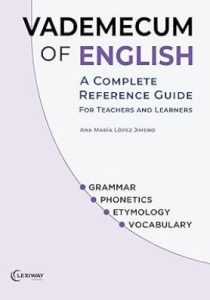
Book Review: Vademecum of English: A Complete Reference Guide for Teachers and Learners

August 10, 2026 Post a comment

2025 NAIWE Reference Book Winner


Author: Ana María López Jimeno

The Vademecum of English is a reference book filled with charts for teachers and those seeking to understand the nuances of the English language. This reference guide could also be helpful for native Spanish speakers who are learning English as a second language.

With that in mind, introductory material, notes, and symbols are in both English and Spanish. Numerous charts are included to learn more about grammar (30 charts), phonetics (16 charts), etymology (54 charts), and vocabulary (16 charts).

This guide is a handy resource for editors, writers, lovers of the English language, and learners of the English language.

Congratulations, Ana María López Jimeno’s Vademecum of English: A Complete Reference Guide for Teachers and Learners for being a NAIWE 2025 Book Award winner!

Categories: Book Award Winners, Book Reviews

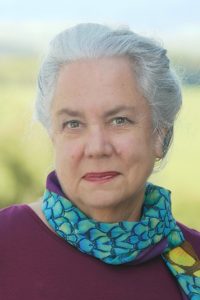
Robin Pool, NAIWE’s Sci-Fi/Fantasy Expert

August 7, 2026 Post a comment

We wanted to get to know Robin Pool (NAIWE’s Sci-Fi/Fantasy Expert) better, so last month we sat down with her. Here are some thoughts she shared with us.

You have a deep background in sci-fi and fantasy. What are the most common world-building mistakes you see indie authors make during a developmental edit?

My father is notorious for reading a half dozen guidebooks before he travels. He wants to know the details before he visits. Readers are not like that!

They are not reading a book to understand the history, socioeconomic system, recent secession crisis, outcome of the war, and environmental turmoil . . . before they even get to know the characters!

Indie authors often add details just to give their reader an overview, but that is not a good strategy, especially not early in the book! Imagine you got off a train in a strange city. What details would you discover first, and what would become clear later in your visit? Spin the details out slowly as they become germane to the story. Keep us in suspense. Save the bird’s eye view for the birds!

If it helps the author to have all of that written out ahead of time, put it in a separate preparation document so it’s not the first thing that comes out when you start the book.

Unless the beginning is already top notch, I advise authors to simply start writing the book wherever it seems right and come back and write a more dynamic beginning later. The beginning is so important that it should not be set in stone when you are just getting your feet wet with the plot or topic.

You can also lose readers by not connecting the details of the world to action or character growth or by setting too many world components against the character, taking away their “elbow room” to act. The world should be like one of those Ninja Warriors courses: plenty of challenges to help the character grow, but also a plausible way through.


How does your background in art history from Princeton influence the way you help authors visually map out or design their fictional worlds?

Before I studied art history, I thought the visual details in a portrait just set the general scene. But actually, they are carefully chosen. It’s not just a general flower, dog, or jewelry the artist wanted to paint; they’re specific images that would resonate with the intended audience. Visual details in a book should be the same.

Writers tend to write about what they think is interesting, or they want to give readers a general visual orientation. But it’s better to choose key details that support the reader’s experience. Don’t describe the wallpaper and the furniture and the lamps and the china. Describe how the delicate bone china teacup trembled in the daughter’s hand as the doctor carried the bowl of blood across the plush carpet of the drawing room. That creates tension and anticipation . . . and keeps the pages turning! Is the character wearing a fancy dress because she is a princess (boring!) or because the voluminous skirts allow her to hide a dagger underneath? Both can be true, but only one is worth writing about!


As a professional writing coach, what is the number one strategy you use to help an author overcome severe writer’s block or structural overwhelm

In my experience, if writer’s block cannot be alleviated by a couple of days off, a creative recharge, or a fresh perspective, there’s typically a deeper problem. My number one strategy is to ask questions to identify it.

Could be severe burnout, a mindset issue like perfectionism or excessive pressure, or even trouble getting back on the “writing horse” after a setback like a bad review.

Often, I find that writers don’t really understand their best writing energies. If writing is a good activity for you, there should be a way to make it pleasurable. However, most of us were trained in school to try to please others and keep grinding even when we didn’t like the work. If you don’t know how to make writing enjoyable, that’s where a professional writing coach can help! Don’t try to hammer down the door. Look for a key to open it.

Once people uncover the problem and retool their approach or mindset, severe blocks typically lift. That can take time, though, so it’s important to be patient with yourself and not cling to old assumptions and habits around productivity or performance. I encourage writers to get the support they need to find their happy writing flow.

——————

How do authors create characters with special abilities that readers can’t get enough of? Ever wondered why Latin incantations and super strength produce perennial best-sellers?

Learn to design compelling character abilities by using a simple 3-step process and avoiding a few basic pitfalls. For any Speculative Fiction genre (from Paranormal Romance to High Fantasy to Steampunk Sci-Fi, even Vampire Littles) this class will help you:

  • maximize your writing gold for your ideal audience
  • integrate abilities into genre expectations, character growth, world-building, and reader aspirations
  • avoid “puncturing the mystery balloon” and “pasting postage-stamps”
  • prevent abilities from feeling overpowered or overused
  • craft inclusive language and avoid sensitivity “hot spots”

This hands-on training includes workshopping case studies and editing real-life examples. Takeaways include a 3-page PDF with Do’s and Don’t’s, a 5-Step Design Framework, and a Compelling Characters Checklist to help you create from scratch or troubleshoot during revisions.

Learn to write special abilities that get your readers to finish a book, start the next one in the series, and recommend it to their friends. Make your words work like magic…or super strength! No Latin needed.

You can join in this conversation on August 20 at 2:00 pm eastern, when NAIWE will host a discussion on creating and developing characters and plots. The cost for NAIWE members is only $10! Nonmembers can join for $30. Register today!


Robin Pool loves the challenge and reward of sci-fi and fantasy. Take all the regular story hurdles – engaging plot, compelling characters – and add in an unfamiliar or even impossible world? That’s an uphill climb! But it’s so worth it! To get good at making the imaginary feel real, Robin has studied social, spiritual, and magic systems from around the globe, including learning Koine Greek and Arabic to read texts in the original. She is equally at home in story settings from pre-history to the speculative future. With decades of experience as a successful small business owner, Robin has coached over 3,000 clients to achieve their writing goals, including major publication credits, prizes, recognition, and readers. She is also an artist (blogging about creativity, knitting, and crochet @robinfpool on Substack), and she loves a good charity shop, especially if she can walk through a garden to get there.

Categories: Board of Experts, Events, Professional Development

Days to Celebrate in August

July 24, 2026 Post a comment

August: National Wellness Month. This month focuses on self-care, managing stress, and promoting healthy routines.

August 1: National Play Outside Day. This is a day to spend a few extra minutes outside, enjoying the fresh air.

August 5: National Work Like a Dog Day. This is a day to pay attention to how hard you are working.

August 3-9: Simplify Your Life Week. This week was dedicated to be an encouragement to refocus your life and declutter. A suggestion is to eliminate things that cause stress or anxiety.

August 8: National Happiness Happens Day. Happiness is a choice. It is not a destination, but a life-long pursuit.

August 8: National Dollar Day. This day commemorates the day Congress established the U.S. monetary system in 1786.

August 9: National Book Lovers Day. A day for those who love to read to find a favorite reading place and settle in with a good book.

August 10: National Lazy Day. Nearing the end of summer, we all need a day to just kick back and do very little.

August 15: National Relaxation Day. Take this day to slow down, unwind, and relax!

August 25-31: Be Kind to Humankind Week. This is a week when we can make a difference in someone’s life by being kind to them.

August 27: National Just Because Day. This is a day to do something unexpected for another (or even for yourself) just because!

Categories: National Days

Member Post: Am I a Writer or Not?

July 20, 2026 Post a comment

I was born into a family of artists. On the paternal side, each generation has produced painters, sculptors, photographers, musicians, dancers, and crafters. No writers until me, and none since.

But I didn’t start as a writer. Rather, by elementary school I was illustrating my life in pen and colored pencil, outperforming peers through high school art classes and developing a reputation as an artist. We all expected me to continue into art school and become a professional illustrator.

It took only one semester of college-level training to make it clear I didn’t have what it takes to be a commercial artist. Nor did I want to be one. Art, I realized, was for myself only. I could not, would not, produce it on demand or according to anyone else’s criteria, which left me standing on square one, wondering what to do with my life.

My only employable skills were typing and spelling. These had built up in the background while I was focusing on art, first from a voracious reading habit and then from decades of writing in diaries and journals, plus composing reports in school. In fact, I had already written a novel. It arose from my teenage fantasies that initially were serial illustrations similar to comic strips. Eventually I dropped the pictures and extended the prose, first in longhand and then on a typewriter. To my surprise, I enjoyed the process. It engaged both the creative and technical parts of my brain.

By the time I nixed art as a career, my only realistic options lay in secretarial work or document production. Accident of timing placed me at the launch of the computer age, where my excellent typing and spelling gave me an employment advantage as a word processor. Thus began a long, bumpy journey in which I sought the right niche in publishing or marketing. Meanwhile, I wrote another novel.

From college onward, I lost having my own bedroom, where I used to draw and paint in privacy. The new normal was cohabiting with partners and/or housemates in close quarters, which made it nigh impossible to create art unobserved. But I could write in notebooks, and later type on screens — even save the material to disk, what a bonus! — without anyone seeing what I was doing.  So I spent more time writing and less time drawing, until I quit art altogether with a sad self-portrait on my thirty-fifth birthday.

Meanwhile, multiple writing-related threads wove together. Business documentation brought me into proofreading and typesetting. Personal projects centered on revising and developing my two novels into publishable works. A rising interest in publishing itself brought me into copyediting. Slowly but surely my career coalesced around producing words.

The day came when I was downsized out of a terrific production job that engaged all my skills and interests, leaving me standing on a new square one. Again by accident of timing, I lived where no comparable jobs were in commuting distance — but the internet had arrived, making remote work possible. As well, the publishing industry was being upheaved by corporate buyouts and dumping a lot of editorial staff, who promptly established themselves as freelancers and created online support communities and referral networks. The combination made it the right time for me to risk self-employment.

I could either reactivate my art side and become a designer and compositor, or stick with the language side and become an editor/proofreader/writer/manuscript preparer. An investment in hardware and software was required either way. Not only was it less expensive to kit up as an editor/writer, but also I had learned that while I might have been born an artist, I did not inherit the designer gene. Failure was guaranteed if I went that route.

So I hung out my shingle and took on all the word-related work I could get: short form, long form, fiction, nonfiction — including academic and technical — in both traditional and indie publishing. I wrote articles for magazines. I finally sold both of my novels, though not until after I’d completed a work-for-hire volume in a nonfiction self-help series. That led to blogging. Then I added book reviewing and contest judging. Occasionally I attended conferences and did some teaching or coaching.

By this route I achieved a role in publishing, but . . . what to call myself? My business name and tagline served — “DocuMania: Production Support for Editors, Writers, and Designers” (or “DocuMania Editorial Services,” as circumstances warranted) — but what about individual identity? It happened often enough in social situations that somebody asked what I did for a living, or business introductions required a simple label.

I settled for Editor, because that covered it all: reading, writing, evaluating, discussing, and producing written material, while dealing creatively with other writers’ works. Unlike my own artistic efforts, editing was — and remains — something I could do on demand, any time, any place, any subject, always engaging my technical side even if the creative side was groaning or shut down. It led me at last to my niche: copyeditor, line editor, and assessor of indie novels. These allowed me to occupy the worlds of imagination and expression while helping others with the mechanical elements they’re wobbly with, in a mutual-benefit balance that paid the bills.

Thanks to this positive mix, I was able to write a third novel, and self-publish it because my experience included mastering the basics of that, too.

My success would not have happened without the support of the online editorial community. While some editors began their careers in the pre-computer era so were already established when tools and opportunities expanded, my late start and uncertain direction would have impaired me at an earlier time, especially since I never lived anywhere near a publisher, university press, magazine, or newspaper — or adequate libraries. By the time I joined the crowd online, endless resources and mentors were available, without having to leave my rural homestead.

In hindsight, I realize I needed to go through the artist phase to discover the writer phase, which proved to suit me better. Yet I still consider myself an artist, because editing is a component of writing, and writers are the literary practitioners among the full arts family that includes painters, sculptors, photographers, musicians, dancers, and crafters. Each of these arts involves technique, tools, and technicians as well as passion and creativity. As an Editor, therefore, I am a Writer and an Artist.


Carolyn Haley

Proprietor, DocuMania Editorial Services

Categories: Member Articles, Writing

Micro Niche in a Macro World

July 17, 2026 Post a comment

There are numerous benefits of having a micro niche. Although there may be fewer potential clients, the competition is less, allowing the freelancers to command higher fees and to obtain more jobs that they bid on. As NAIWE expert Jeanne Grunert puts it, having a micro niche is akin to being a big fish in a small pond, allowing you to command a higher rate.

Being part of NAIWE allows those within a micro niche to come together to bounce ideas off one another and to see the trends within a specific micro niche.

NAIWE helps its members stay strong and remain profitable!


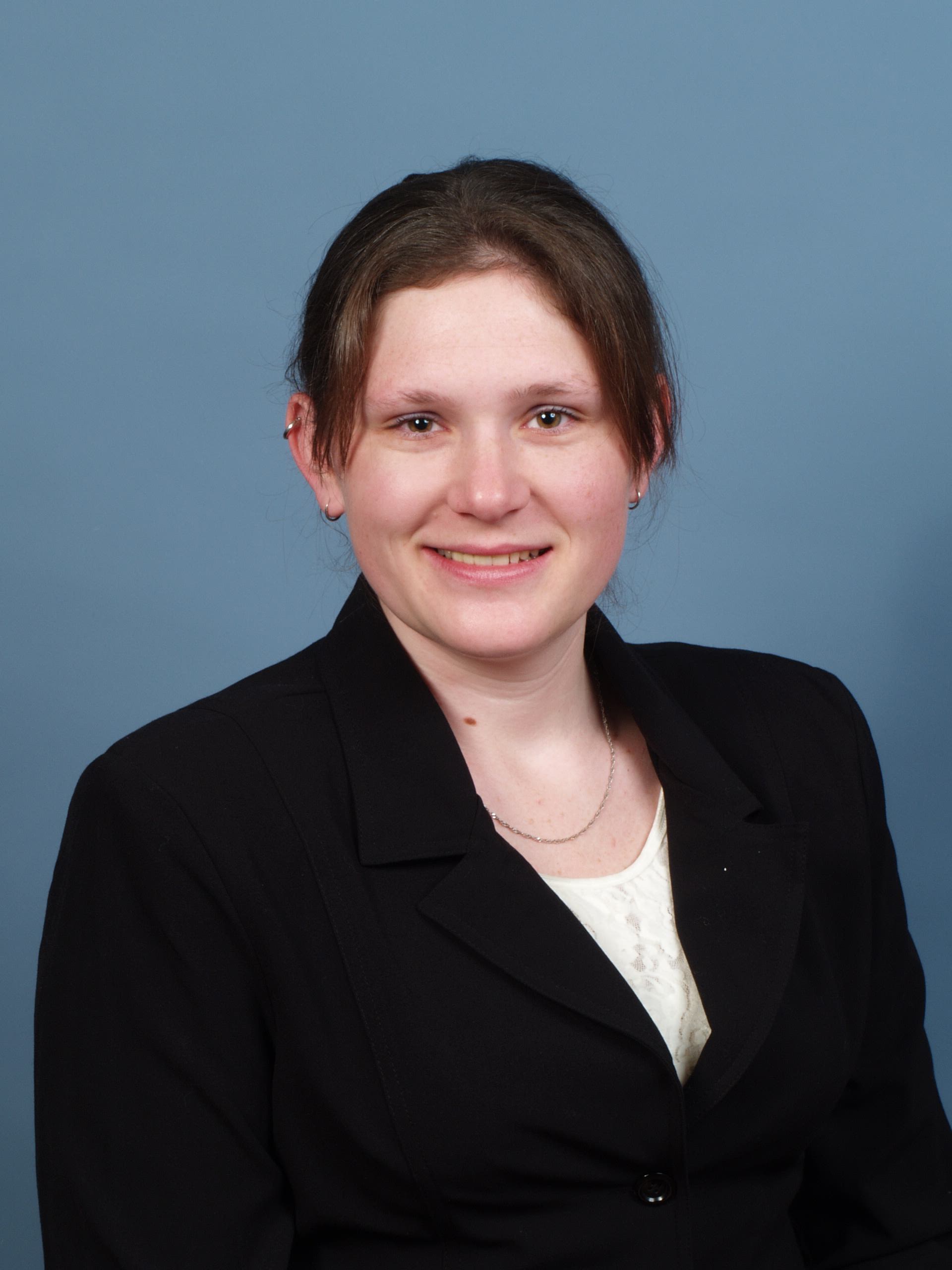
April Michelle Davis, NAIWE Executive Director

April Michelle Davis has been the executive director of the National Association of Independent Writers and Editors (NAIWE) since 2018. Prior to that, she was NAIWE’s Social Media Marketing Expert. NAIWE is an association that focuses on career building for writers, editors, and other professionals in the publishing industry by developing multiple streams of income; it helps its members market their products and services through social media, newsletters, and more.

She is also the coordinator for the Virginia chapter of the Editorial Freelancers Association, a lifetime member of the American Copy Editors Society, and a freelance editor, indexer, proofreader, and author. April Michelle has taught courses through her own company, Editorial Inspirations, as well as for associations and colleges on topics such as editing, indexing, grammar, writing, and creating macros.

Her credentials include a master’s degree in publishing from George Washington University and a bachelor’s degree in English from Messiah College, as well as certificates in editing (University of Virginia), book publishing (University of Virginia), and professional editing (EEI Communications).

April Michelle has shared her insights about her career development by contributing quotes and vignettes to several books. She has presented sessions on various editorial topics to many groups, including the Virginia Writers Club, the Communication Central conference, Randolph-Macon College, the Christian PEN: Proofreaders and Editors Network, the EFA, Copyediting newsletter, RavenCon, and the Hanover Book Festival. In addition, April Michelle has published four books.

Categories: Marketing, News

Book Review: Midlife Calculus

July 13, 2026 1 Comment

2025 NAIWE Poetry Winner


Author: Britt Kaufmann

Students in high school are often finding themselves and in turn beginning to question the purpose of the subjects they are required to study. Britt Kaufmann is a high school math tutor who writes poetry that reflects on both math and life (sometimes including her life interactions with these high schoolers) and how those two intertwine in Midlife Calculus.

She makes potluck pleasantries:
“What do you do?”

I work at the high school, I say. An extra body in the math
classes, sitting in graffitied desks with the students, modeling
how to take notes and pay attention. I’m right there, to
encourage them to ask questions, give extra help. Sometimes
I “Vanna”—work the problems on the board as the teacher
talks, so he doesn’t lose eye-contact with the kids. It’s a
grant-funded position.

“Oh.”

Britt Kaufmann captures moments from her life and relates them to math concepts, such as the x-axis, irrationals, operations, or infinitesimal changes. She also writers about her experiences with working in a high school.

The parent is confused:

“Why are you calling me?”

I’m part of the Student Success Team, I say. I can set up a
one-on-one meet with your child while they’re on quarantine
to help them complete their math assignments. They can
share their screen and I can walk them through each
problem. Have them email me a time and I’ll send a link.

“Ok.”

Midlife Calculus combines the purpose of math with important life events, such as the pandemic, the educational system, and school shootings, but also with Kaufmann’s life events such as change, time passing by, and love.

The mid-year hire is curious:

“What, exactly, is your role here?”

I am the chewed up piece of gum, I say, trod into the
floorboards so the kids don’t fall through the cracks.

“Uh . . .”

Britt Kaufmann uses this space to share her experiences and love of math and the students she works with, along with her life struggles and limitations as an educator.

My nephew snuggles into my lap:

“What is your job?”

I’m a tutor, I say. You know how your kindergarten class
has an extra adult to help out? I’m like that person, except
at a high school.

“So, you go to the high school and toot?”

Congratulations, Britt Kaufmann’s Midlife Calculus for being a NAIWE 2025 Book Award winner!

Categories: Book Award Winners, Book Reviews

Member Benefit: Discount on PlainVanilla

July 10, 2026 Post a comment

Member Benefit #42

PlainVanilla makes contracts very, very easy. Our software allows users to start with a balanced template, make changes to fit circumstances, and constantly assess how normal those changes are. This level of transparency allows you to know if you’re signing up for something reasonable, or if it could be a bad deal.

NAIWE members receive two years’ worth of contract templates!

Visit the NAIWE website to see all of the member benefits.

Categories: Member Benefits

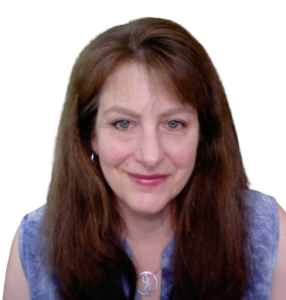
Helen Armalas, NAIWE’s Style Guide Expert

July 3, 2026 Post a comment

We wanted to get to know Helen Armalas (NAIWE’s Style Guide Expert) better, so last month we sat down with her. Here are some thoughts she shared with us.

Authors have praised your ability to deliver constructively critical feedback directly and honestly during initial video consultations. How do you establish trust and set realistic expectations during that first 30-minute discovery call?

Establishing trust in an initial client call requires professionalism (fundamentally respect), being proactive and prepared (by reading sample material and writing out questions and potential next steps beforehand), and actively listening to the client. Since many authors are not versed in the language of and the different types of editing, I always ask them what their expectations are for an editing project, what specific concerns they have with their manuscript, what level of editing they desire (which typically tells me how receptive they are to criticism), and what questions they have for me. Listening to the client’s needs and drawing certain information out of them through having an authentic, honest conversation and by asking questions helps to get us on the same page so that we both have a clear understanding of what my services would entail for their specific manuscript.


Many student editors struggle to balance accuracy with professional speed expectations. What exercises or habits do you recommend to help novice editors increase their words-per-hour efficiency?

To become a faster editor while still being accurate, become fluent in Word’s different features and keyboard shortcuts. Also, use checklists and do multiple passes through the manuscript concentrating on different common mistakes (e.g. number formatting, capitalization, hyphen usage, etc.). As you move through a manuscript, you will become more acquainted with not only the author’s style but their mistakes (and people tend to make the same mistakes over and over again until they become aware of them). You can then search and correct these mistakes all in one pass, speeding up tedious editing. Also, if you find an error that you are having trouble finding the solution to, bookmark it and come back to it later. Instead of wasting time agonizing over one detail, keep moving. Often the answer comes to you as you work through the manuscript.


——————

Style sheets are important tools that editors create while copyediting manuscripts. When done well, they serve as a useful resource to the copyeditor, author, proofreader, and (if applicable) in-house production team to track a manuscript’s stylistic decisions, words and terms, citation preferences, and, in fiction, timeline and character development. In this webinar, we will go over how to make a style sheet for both fiction and nonfiction books using The Chicago Manual of Style as a primary resource. While covering the importance of using the style sheet as an aide to ensure consistency and correctness in manuscripts, we will also go over different Chicago Manual sections as well as other resources that are often referenced when copyediting manuscripts.

You can join in this conversation on July 22 at 2:00 pm eastern, when NAIWE will host a discussion on creating and using useful style sheets. The cost for NAIWE members is only $10! Nonmembers can join for $30. Register today!


Helen Armalas is a freelance editor currently residing in Chicago, Illinois. She provides a full range of editing services to traditional publishers, university presses, museums, independent authors, and business clients. A versatile editor, Helen edits nonfiction and fiction (adult and young adult), academic journals, museum-exhibition text, and really anything you throw at her. She is fluent in The Chicago Manual of Style, MLA, APA, AP, and the AMA Manual of Style. Before starting her own freelance editing business in 2023, Helen worked for over ten years in different professional service industries as an accountant and then executive assistant. Disenchanted with the business world, Helen quit her job and decided to pursue her lifelong dream of working with words and being her own boss. Helen has a BA in Art History, Theory, and Criticism from Columbia College Chicago and has completed the Editing certificate program, with additional coursework in medical editing and writing, from the University of Chicago. When she is not reading or editing, Helen is spending time with her two extra-spicy dogs, Louise and Jackie.

Categories: Board of Experts, Events, Professional Development

Days to Celebrate in July

June 26, 2026 Post a comment

July 4: Independence Day. The day after the first anniversary of American independence, John Adams wrote a letter to his daughter Abigail about the celebrations that occurred in Philadelphia. Take a moment to reflect and write a letter about how your town celebrates this holiday.

July 4: National Play Outside Day. Spend a few minutes outside today enjoying the beauty and the fresh air.

July 5: National Workaholics Day. Work isn’t everything! Use this day as a reminder to have a proper work-life balance.

July 12: National Simplicity Day. Henry David Thoreau was born on July 12, 1817. Thoreau was an advocate for living a life of simplicity. In our busy lifestyles, National Simplicity Day is the time to take a step back and begin to simplify our lives. One can start by decluttering and striving for balance.

July 15: National Give Something Away Day. In the United States, giving is on the rise. What can you give to your clients or to the publishing industry?

July 16: Get to Know Your Customers Day. When businesses get to know your customers, you also get to know more about your need to grow. Reach out to your patrons and get to know them better.

July 17. World Emoji Day. Emojis are images that express, similar to emoticons (emotions + icons) that are produced from an arrangement of keyboard characters.

July 18: Toss Away the “Could Haves” and “Should Haves” Day. Created by author and motivational speaker Martha J. Ross-Rodgers, this day is intended for all to let go of the past and live for the present. Make a list of your business regrets and then throw it away and live for today.

July 19: National Play Day. Summer is in full swing, and today is a great day to to unleash your inner child, spark your creativity, and learn why play is an important part of living a happy life.

July 19: National Words with Friends Day. People have always challenged each other with word puzzles and games. Honor the intellectual spirit and camaraderie that come with playing word games.

July 21: National Be Someone Day. Through your business, be someone who betters a child’s life.

July 26: National All or Nothing Day. Throw caution in the wind and go for broke. What is one business challenge that you would like to overcome?

July 31: National System Administrator Appreciation Day. Show appreciation to your IT professional.

Categories: National Days

  • 1
  • 2
  • 3
  • …
  • 45
  • Next Page »

Recent Posts

  • Member Benefit: Discount on ProWritingAid
  • Book Review: Vademecum of English: A Complete Reference Guide for Teachers and Learners
  • Robin Pool, NAIWE’s Sci-Fi/Fantasy Expert
  • Days to Celebrate in August
  • Member Post: Am I a Writer or Not?

Categories

Links

  • Member Area
  • NAIWE Bookstore
  • NAIWE- The Association Site
  • Words Matter Week

Meta

  • Log in
  • Entries feed
  • Comments feed
  • WordPress.org

Latest Posts

Member Benefit: Discount on ProWritingAid

August 14, 2026

Book Review: Vademecum of English: A Complete Reference Guide for Teachers and Learners

August 10, 2026

Robin Pool, NAIWE's Sci-Fi/Fantasy Expert

August 7, 2026

Days to Celebrate in August

July 24, 2026

Member Post: Am I a Writer or Not?

July 20, 2026

Micro Niche in a Macro World

July 17, 2026

Contact Us

  • 804-476-4484
  • P.O. Box 412
    Montpelier, VA 23192-0412
Facebook Instagram Linkedin twitter

© NAIWE. All rights reserved. Designed by My House of Design.