National Association of Independent Writers & Editors
Facebook Instagram Linkedin twitter

Search

SubscribeLogin

  • About
    • About NAIWE
    • Board of Experts
    • Amazon-Affiliate Book
    • FAQs
    • Advertising
  • Join Us
    • Join NAIWE
    • Benefits
    • Reasons to Join an Association
  • Training
  • Find a Professional
  • Blog
  • News & Events
    • The Edge
    • Conference
    • Podcasts
    • Summer Challenge
    • Words Matter
      • Words Matter Week
      • How to Participate
      • Media
  • Post a Job
  • Contact
  • Member Sites

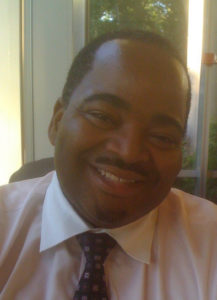
Kajli Prince, The Tax Expert

March 13, 2020 Post a comment

We wanted to get to know Kajli Prince (NAIWE’s Tax Expert) better, so last month we sat down with him. Here is what he shared with us.

For those of us who are putting funds in traditional or Roth IRAs to fund our retirement, the ages 50, 55, 59 1/2, and 72 may have implications for our taxes. Please explain the implications as they relate to taxes for freelancers.

There are really only three relevant ages, with respect to individual retirement accounts, i.e., traditional and Roth IRAs: 50, 59 1/2, and 72. Further, these ages are relevant as pertains to contributions (limits) and distributions.

Individual Retirement Account

Contributions (for 2019 and 2020)

Under age 50 = $6,000

Age 50 and older = $6,000.00 + $1,000.00 catch-up

Note: For a SEP IRA (for self-employed persons) = 20% of net self-employment (SE) income after one-half SE tax deduction, up to $57,00.00. So basically, 20% of the same number the qualified business income deduction is calculated from.


Distributions (for 2019 and 2020)

Under age 59 1/2, distributions (withdrawals) are subject to an additional 10% tax. And if you participate in traditional IRA (not a Roth) and are 70 1/2 years old in 2019 you must take your first required minimum distribution (RMD) by April 1, 2020. If you reach age 70 1/2 in 2020 or later you must take your first RMD by April 1 of the year after you reach 72.


There is no particular significance to age 55. Although, it is a good age to consider your current tax rate and the type of IRA you are making contributions to.


For self-employed individuals, what is considered proof of income for tax purposes?

Documentation as proof of income can be very broad for self-employed individuals. For example, you can record the fact that you paid for goods or services on a napkin while doing a business transaction in a bar. At the end of the day, you just have to be able to show documentation for whatever income and expenses you are reporting on your tax return.


When preparing tax returns for freelancers, what deductions have you seen are the most overlooked?

I would say the home-office deduction. But I think a close second would be retirement tax shelters and credits. I will go into more detail during the webinar, and for now I will say self-employed individuals definitely benefit from some pretty sweet perks.

__________

For those of you who are putting funds in traditional or Roth IRAs to fund your retirement, the ages 50, 55, 59 1/2, and 72 have implications for your taxes. There are limitations when it comes to IRAs whether it is a Traditional or a Roth. The various limitations have to do with income, whether or not you participate in your employer’s retirement account, your filing status, and your age.

You can join in this conversation on March 27, at 7 pm eastern, when NAIWE will host a discussion on identifying and managing difficult freelance clients. The cost for NAIWE members is only $10! Non-members can join for $30. Register today!
Categories: Board of Experts, Events, Taxes

Kajli Prince, The Tax Expert

February 21, 2020 Post a comment

We wanted to get to know Kajli Prince (NAIWE’s Tax Expert) better, so last month we sat down with him. Here is what he shared with us.

What do you feel is one of the most beneficial pieces of tax advice you have given? Why?

Have multiple streams of income. Often, having one stream of income is not sufficient to meet both current and future financial needs. Future needs include retirement, i.e., how much you think you may need to retire and how you plan on getting to that number.


Are marketing expenses deductible?

Yes. Generally speaking, the government allows freelancers to deduct marketing expenses that help bring in new customers and keep existing clientele.


Is there a checklist to help freelancers avoid overlooking tax credits?

Yes, there are checklists. However, I find that the best guide to use is a Schedule C (Form 1040). Part II of the Schedule C lists the expenses that a self-employed individual (freelancer, etc.) typically claims.

__________

It’s tax time! Are you ready? Learn about relevant credits and deductions that apply to independent writers and freelance editors, with a focus on the new deduction: Qualified Business Income Deduction. It is a new provision from the most recent changes in the tax law (Tax Cuts and Jobs Act) that allows small business owners to deduct up to 20% of their qualified business expenses.

You can join in this conversation on February 27, at 7 pm eastern, when NAIWE will host a discussion on identifying and managing difficult freelance clients. The cost for NAIWE members is only $10! Non-members can join for $30. Register today!

Categories: Board of Experts, Events, Taxes

Jake Poinier, The Freelance Expert

February 7, 2020 Post a comment

We wanted to get to know Jake Poinier (NAIWE’s Freelance Expert) better, so last month we sat down with him. Here is what he shared with us.


Can you share some ways to market to potential clients of the caliber that you would like to work with?

My biggest and best resource is referrals, which is obviously a long-term play rather than a quick fix. Even so, you can definitely plant the seeds in clients’ heads that you welcome introductions to their peers who might benefit from your services. Research shows that most people have to be asked; it’s not automatic. Second, and related to referrals, is networking with local businesses. I’m part of a group of business owners that meets once a month and it’s been a great source for projects over the years, since I’m the only writer/editor. Third, cold-calling gets a bad rap, but I’m a fan of simply contacting local businesses that I know could use my services, such as graphic designers/web designers.


How important is it to have a website?

Incredibly important! The most marketing/advertising money I’ve spent over the years has been on my websites. For my biz, it’s not as much about attracting out-of-the-blue clients from web searches as it is presenting a professional image for people who’ve been referred. It’s also a convenient way to display a portfolio of work, rather than sending a bunch of links or files to someone. Big picture: I believe writers often make the mistake of thinking that our words alone will be enough to persuade people, but I have always spent the money on graphic designers to make my sites visually appealing and functional–and it’s been worth every penny.


Does it help to be a member of an association?

I definitely think being the member of a few associations lends credibility with prospective clients. More important, though, is what you do with that membership. Are you speaking at conferences, presenting webinars, writing blogs, volunteering, etc.? When you can mention those types of activities in casual conversation, it will make you stand out far more as an expert in your field.

__________

You don’t have to be a freelancer for long before you learn that not every client is what they first seem, and not every project goes according to plan. In this webinar, Jake Poinier outlines a real-world approach to screening prospects as well as bringing challenging clients back into line. Topics include

  • Red flags to watch for
  • Questions to distinguish tire-kickers from serious prospects
  • Why contracts, deposits, and budgets aren’t just about the money
  • How to decide when it’s time to part ways and professional ways to do it.

You can join in this conversation on February 18, at 7 pm eastern, when NAIWE will host a discussion on identifying and managing difficult freelance clients. The cost for NAIWE members is only $10! Non-members can join for $30. Register today!

Categories: Board of Experts, Events, Marketing

Greg Smith, The Agile Writing Expert

January 3, 2020 Post a comment

We wanted to get to know Greg Smith (NAIWE’s Agile Writing Expert) better, so last month we sat down with him. Here is what he shared with us.


Do you offer any marketing ploys unique to a story line with a villain?

Creating a unique villain, one that is compelling, will make your novel more interesting–perhaps even more-so than creating an interesting hero. You see, your hero can only be as strong as your villain. If you have a weak villain, he is easy to defeat–and so your hero doesn’t have much to fight against. But create a strong villain–one that is even stronger than your hero–then the villain’s defeat is even more powerful.


Can you suggest some advertising websites that cater to a villain in the story line?

One great website–not just for villains–but for anything having to do with stories is TV Tropes. You’ll find a vast encyclopedia dedicated to all the tropes, symbols, devices, and stereotypes used in fiction. Also, check out BookBub to create an instant media presence for your book. It’s advertised as a site for readers, but they will advertise your book to thousands of readers on their list as well.


Belonging to an association is key for all freelancers. What associations do you recommend and why?

Of course, NAIWE is a great start. The Independent Book Publishers Association is a super organization for self-published authors. And if you haven’t already, check out Publisher’s Weekly. Get on their mailing list to keep abreast of everything going on in the publishing industry. I was one of the first in my circle to know of a Barnes & Nobles sale and alerted all my followers to the demise of the Romance Writers of America, thanks to Publisher’s Weekly.

__________

You’ve probably heard of Joseph Campbell’s “Hero’s Journey.” This is the time-worn pattern of stories that dates to antiquity. But as every story must have a hero (or protagonist), there must also be a villain (or antagonist). In this hour-long webinar, Greg Smith will review the Hero’s Journey, then lay out the Villain’s Journey—its similarities and differences. Greg will describe why you need an oppositional character (who is not always villainous) and how a villain becomes a villain. Greg will also describe the pitfalls of creating the “pure evil” villain and how to avoid a weak villain. Tune in and learn how to craft “The Villain’s Journey.”

You can join in this conversation on January 23, at 8 pm eastern, when NAIWE will host a discussion on the importance of a strong villain.

The cost for NAIWE members is only $10! Non-members can join for $30. To register for this webinar, send an email with your name and telephone number and an invoice will be sent to you for the amount owed.

Categories: Board of Experts, Events, Writing

MJ Courchesne, NAIWE’s Copyright & Permissions Expert

December 6, 2019 Post a comment

We wanted to get to know MJ Courchesne (NAIWE’s Copyright & Permissions Expert) better, so last month we sat down with her. Here are some thoughts she shared with us.


What aspects of publishing can be turned into avenues for marketing?

Whenever you execute a license of your material to a third party by way of an excerpt, new edition (think audio), permission, or other adaptation, you can think of that as a sort of “ad” for your book and your publishing brand (you as an author or you as a publisher). Essentially, any new venue that you can reach beyond traditional sales is a good opportunity to call back to the original publication and generate more sales or at the least awareness of your product. Of course, you need to ensure that the license includes an appropriate credit line, thumbnail of your cover, or other callback to your original work so that people can read more!


Can protecting your intellectual property with a copyright be an advantage when it comes to advertising it?

Copyright vests with the creator from the moment of creation, but registering your copyright with the U.S. Copyright Office is a useful (and recommended) way to protect your intellectual property from possible infringement that may occur online or in other venues. Although I’d still say it’s rare for someone to be infringed from an advertisement of their work, it’s good to have that protection in place. Registration is certainly not a requirement, but I usually recommend my clients take that extra step for the peace of mind it offers, especially once that title is out there in the world.


You belong to several associations. Do you find that being a member of associations leads to more advertising opportunities? 

Membership in professional organizations and associations certainly helps me to network and find those people who might need my services, so I always look forward to joining associations where I might be of use to their members. Education is a big part of my business, and so webinars, talks, and simple networking are useful in educating authors and publishers about issues surrounding copyright and permissions. It’s all about finding people when they need you.

__________

As a writer, you know the value in your work, and have a keen interest in protecting it. You also may know that your work is copyrighted to you as soon as you put thoughts into a fixed medium, so why should you bother registering your copyright with the US Copyright Office? Using case studies and scenarios, this webinar will review the basics of copyright law in the US, why you should register your work, how to go about registration, and some common misconceptions of copyright, permissions, and fair use.

You can join in this conversation on December 16, at 3 pm eastern, when NAIWE will host a discussion on copyright and your works.

The cost for NAIWE members is only $10! Non-members can join for $30. To register, send an email with your name and telephone number.

Categories: Board of Experts, Copyright, Events

John McIntyre, NAIWE’s Grammar Expert

November 1, 2019 1 Comment

We wanted to get to know John McIntyre (NAIWE’s Grammar Expert) better, so last month we sat down with him. Here are some thoughts he shared with us.

What is one thing that you learned about your craft (or grammar) the hard way, and what benefits have you received from it?

In an early post on my blog, “You Don’t Say” at Baltimoresun.com, I published a simplistic explanation of the that/which distinction and was smartly rapped on the knuckles by Geoffrey Pullum, the distinguished linguist. The discovery that having been a newsroom grammar expert did not make me a full-fledged expert was humbling, and it led me to a reexamination—continuing—of what I think and know about grammar and usage. I learn, and unlearn, something nearly every day.


What has been your most rewarding grammar experience (or correction), and how was it rewarding? Self? Monetary? Clients?

Blogging since 2005 has given me an audience across the United States and internationally of people who are interested in language and receptive to learning more. I’ve formed friendships with fellow editors, linguists, and lexicographers, some of the smartest and funniest people you could ever expect to encounter. (One of the people I’ve come to know is Professor Pullum, who has endorsed some of my better-informed posts.)


What do you associate with grammar expertise?

I call myself an informed presctiptivist. Editing is inherently prescriptive, because it involves making choices, often subjective ones, about what would be better in the text. But I have no truck with the stale pedantry of shibboleths, bogus rules, and superstitions about language retailed by some people who call themselves prescriptivists and embrace the false prescriptivist/descriptivist dichotomy.

Grammar expertise requires flexibility, attention to register, and awareness that the fundamental rule of grammar and usage is “generally, with exceptions.”

__________

We know that split infinitives are okay, sentences can begin with conjunctions, sentence-ending prepositions are perfectly good English, and it’s okay to use hopefully as a sentence adverb. We know this because grammarians and linguists have been gleefully exploding shibboleths and bogus rules. But what rules or usages are worth maintaining? In this webinar, John McIntyre of The Baltimore Sun will examine some defensibles. Should we maintain the imply/infer distinction? Is the traditional sense of “beg the question” in logic hopelessly lost? Is “whom” dead to us?

Sign up, take part, and work out where you want to stand your ground.

You can join in this conversation on November 19, at 2 pm eastern, when NAIWE will host a discussion on grammar.

The cost for NAIWE members is only $10! Non-members can join for $30. To register, send an email with your name and telephone number.

Categories: Board of Experts, Events, Grammar

Carol Tice, NAIWE’s Content Marketing Expert

October 11, 2019 Post a comment

We wanted to get to know Carol Tice (NAIWE’s Content Marketing Expert) better, so last month we sat down with her. Here are some thoughts she shared with us.

What wins have you personally seen from LinkedIn marketing?

I’ve been hired by three Fortune 500 companies after they found me on LinkedIn—Costco, Alaska Airlines/Horizon, and Labor Ready (now TrueBlue)—among many other inbound leads I’ve received through my profile and the content I post.

Why bother with content marketing on LinkedIn—what’s the upside here?

LinkedIn is THE social platform for connecting with prospective clients all over the world—it’s the only place where you can overtly state you’re looking for clients without getting blocked or banned. It’s also an easy place to quickly build authority with posts on LinkedIn’s blog, a/k/a Pulse. In my mastermind program, I’ve coached students for several years on how to attract clients on LinkedIn, and they’ve seen reliable success in a fairly short time.

I’ve posted on LinkedIn, but nothing ever happens. Why?

There are a few fundamentals you need in order to attract attention on LinkedIn—your profile needs to be enticing and complete (including keyword phrases for your industries or types of writing, so LinkedIn knows who you’re looking for), you need to build up your connection count, and be active on the platform.

Once you complete your profile, you have to know what to post and how to write a STRONG headline to make your content on LinkedIn work for you. I see many writers posting about writing topics or their personal life, rather than on topics their target clients would be likely to click on and read. I’ll be discussing the differences there, and how to craft content that moves your marketing forward.

__________

So you’ve got your LinkedIn profile set up. Now what? What do you write in your status updates, or in LinkedIn’s articles section, to build your authority and attract the clients you want?

This example-filled presentation will show you multiple strategies and approaches for creating content for LinkedIn that builds your business — even if you don’t have much time to spare.

You can join in this conversation on October 23, at 2 pm eastern, when NAIWE will host a discussion on book marketing.

The cost for NAIWE members is only $10! Non-members can join for $30. To register, send an email with your name and telephone number.

Categories: Board of Experts, Events, Marketing

Tina Glasneck, NAIWE’s Book Promotions Expert

September 13, 2019 Post a comment

We wanted to get to know Tina Glasneck (NAIWE’s Book Promotions Expert) better, so last month we sat down with her. Here are some thoughts she shared with us.

What is one thing that you learned about your craft the hard way, and what benefits have you received from it? Can these benefits be broadened to include book promotions?

The most important thing to recognize for one’s craft is that of identifying the target audience, as a book is not written for everyone. It must have a specific audience in mind. Genres, of course, are there to assist readers in locating books that they like. Often, there are specific tropes that are used in the genre.

For example, romance requires a happy for now or happily-ever-after ending. If it does not meet that standard, then it cannot be classified as a romance. If it is advertised as a romance, the genre tropes and requirements are something to keep in mind when it comes to crafting a novel, as well as the later marketing of it.


What has been your most rewarding book promotions avenue, and how was it rewarding? Self? Monetary? Clients?

I believe that the best thing an author can do is grow their newsletter, and that growth is from where most of my success continues to come.

It is through my newsletter that I can create relationships with my readers, who frequently will then share news of my books with their circle of friends. All other promotion has its uses, but for long-term growth, the newsletter is the best way to continue to grow.


What do you associate with book promotions?

Book promotion is when the goal is to promote or make an audience aware of a particular book. This can include, but is not limited to:

  1. paid ads (like Facebook, Amazon and BookBub ads)
  2. paid newsletter ads (these are ads in book newsletters. Note, some are genre-specific, while others are not)
  3. newsletter swaps (when authors share the news of a different author’s book to their audience)
  4. free or cost-efficient promo (posting in Facebook groups, blogging, guest blogging, multi-author book fairs, tweeting, using social media to push the book without paying, creating a perma-free book to drive sales to other books in a series, creating a lead magnet to get new readers to sign up for your newsletter, etc.).

Paying for expensive book promotion only makes sense if one has more than one book in a series, or other books available that a reader can purchase. Book promotion is to advertise and to make readers aware of a product. It is best to use cheaper options, all within one’s author budget before one launches the more advanced ad campaigns.

__________

Are you struggling with what you can do to make your books a success? Are you overwhelmed with what you need to do to get eyes on your latest book-baby? Join USA Today bestselling author Tina Glasneck as she gives practical advice on what you can apply to your writing career to find readers and gain success. This webinar will dig into the basics and provide practical tips that you can implement right away to start you on your successful author journey.

You can join in this conversation on September 23, at 8 pm eastern, when NAIWE will host a discussion on book marketing.

The cost for NAIWE members is only $10! To register, send an email with your name and telephone number.

Categories: Board of Experts, Events, Marketing

Kristen Fischer, NAIWE’s Journalism Expert

August 9, 2019 Post a comment

We wanted to get to know Kristen Fischer (NAIWE’s Journalism Expert) better, so last month we sat down with her. Here are some things she shared.

What is one thing that you learned about your craft the hard way, and what benefits have you received from it? Can these benefits be broadened to include marketing?

As a digital journalist, making connections was the hardest part. Finding editors to assign regular work can be so difficult because they move around so much. You have to keep putting yourself out there and continuously making new business relationships. The benefit is that you can write for a great publication, work with an editor who keeps you in mind throughout their career, secure references, and find a regular feed of work or a home for regular pitches. Those benefits can help you market yourself as a journalist and build your platform.

What has been your most rewarding marketing avenue, and how was it rewarding? Self? Monetary? Clients?

Letters of introduction. The direct connection you get from sending an email can be quite helpful in establishing a relationship–especially in the digital world.

What do you associate with marketing?

Creativity. Even if you’re not working in the marketing field, writers are creative people. Also, they have to find creative ways to market themselves. I hope more freelance journalists realize that staying in business for themselves isn’t so much about the writing; it’s about running your business. And staying in business demands marketing.

_____

Whether you write for digital or print avenues, being a freelance journalist can be tough. This webinar will explore how to target publications, how to secure editorial contacts, how to line up regular work, and how to overcome obstacles that arise when you’re not on staff. Participants will learn business tips to break into new publications as a freelancer and keep a steady flow of freelance work coming. Bring a list of questions and your best tip for securing work as a freelance journalist.

You can join in this conversation on August 22, at 3 pm eastern, when NAIWE will host a discussion on marketing as a freelance journalist.

The cost for NAIWE members is only $10! To register, send an email with your name and telephone number.

Categories: Board of Experts, Events, Writing

Mark Allen, NAIWE’s AP Stylebook Expert

July 12, 2019 Post a comment

We wanted to get to know Mark Allen (NAIWE’s AP Stylebook Expert) better, so last month we sat down with him. Here are some things he shared.

What is one thing that you learned about style manuals the hard way, and what benefits have you received from it?

Style manuals keep changing because language keeps changing. There was a time when I felt that I knew all the quirks of the Associated Press Stylebook, and then I found my convictions were no longer valid because they changed the book! There are plenty of shibboleths in the AP Stylebook—things that only AP adherents really care about but that cause consternation when AP makes a change. “More than” and “over” are now mostly interchangeable. The word “collide” no longer assumes that both things are in motion. These are minor things, but no one wants to be enforcing a usage guideline long after it’s dead.

What do you associate with style guide proficiency?

Proficiency with using a style guide is a bit like proficiency with editing in general. We can’t know everything, and we shouldn’t tell ourselves otherwise. Proficiency with a style guide means knowing what we need to look up and sometimes even looking up things we know we are right about. Proficiency is a bit of a false concept. There are many guidelines, many exceptions, and many gray areas where we need to look elsewhere for guidance and ultimately apply common sense. It’s possible to memorize most key points in a style guide, but our memories sometimes fail us, and guidelines do change.

_____

You can join in this conversation on July 24, at 7 pm eastern, when NAIWE will host a discussion some of the most important changes of 2019.

The Associated Press Stylebook, the essential guide to style and usage for news, PR, marketing, and corporate communication, is now updated for 2019 with its most substantive changes in years. NAIWE AP Stylebook Expert Mark Allen will discuss the important changes in a 90-minute webinar complete with humor and handouts.

The cost for NAIWE members is only $10! To register, send an email with your name and telephone number.

Mark Allen is an editor, writer, and teacher focused on helping people communicate with clarity and honesty. He has trained hundreds of editors and writers on a variety of topics, including the latest and most important elements in the Associated Press Stylebook and the Chicago Manual of Style. Mark has led conversations about copyediting and writing at conferences and workshops in Detroit, St. Louis, Las Vegas, New Orleans, Philadelphia, Portland, Columbus, Chicago, Pittsburgh, New York City, and York, England. He was the first freelancer elected to the executive board of ACES: The Society for Editing, and Mark currently teaches advanced copyediting for UC San Diego Extension’s copyediting certificate program.

Categories: Board of Experts, Events, Style Manuals

  • « Previous Page
  • 1
  • …
  • 11
  • 12
  • 13
  • 14
  • Next Page »

Recent Posts

  • Days to Celebrate in May
  • Book Review: Hidden History of Pearson Field
  • Member Benefit: Free Financial Consultations and Personalized Plan Reviews
  • Ruth Thaler-Carter, NAIWE’s Networking Expert
  • Days to Celebrate in April

Categories

Links

  • Member Area
  • NAIWE Bookstore
  • NAIWE- The Association Site
  • Words Matter Week

Meta

  • Log in
  • Entries feed
  • Comments feed
  • WordPress.org

Latest Posts

Days to Celebrate in May

April 24, 2026

Book Review: Hidden History of Pearson Field

April 13, 2026

Member Benefit: Free Financial Consultations and Personalized Plan Reviews

April 10, 2026

Ruth Thaler-Carter, NAIWE's Networking Expert

April 3, 2026

Days to Celebrate in April

March 27, 2026

Achieving with Words

March 20, 2026

Contact Us

  • 804-476-4484
  • P.O. Box 412
    Montpelier, VA 23192-0412
Facebook Instagram Linkedin twitter

© NAIWE. All rights reserved. Designed by My House of Design.