National Association of Independent Writers & Editors
Facebook Instagram Linkedin twitter

Search

SubscribeLogin

  • About
    • About NAIWE
    • Board of Experts
    • Amazon-Affiliate Book
    • FAQs
    • Advertising
  • Join Us
    • Join NAIWE
    • Benefits
    • Reasons to Join an Association
  • Training
  • Find a Professional
  • Blog
  • News & Events
    • The Edge
    • Conference
    • Podcasts
    • Summer Challenge
    • Words Matter
      • Words Matter Week
      • How to Participate
      • Media
  • Post a Job
  • Contact
  • Member Sites

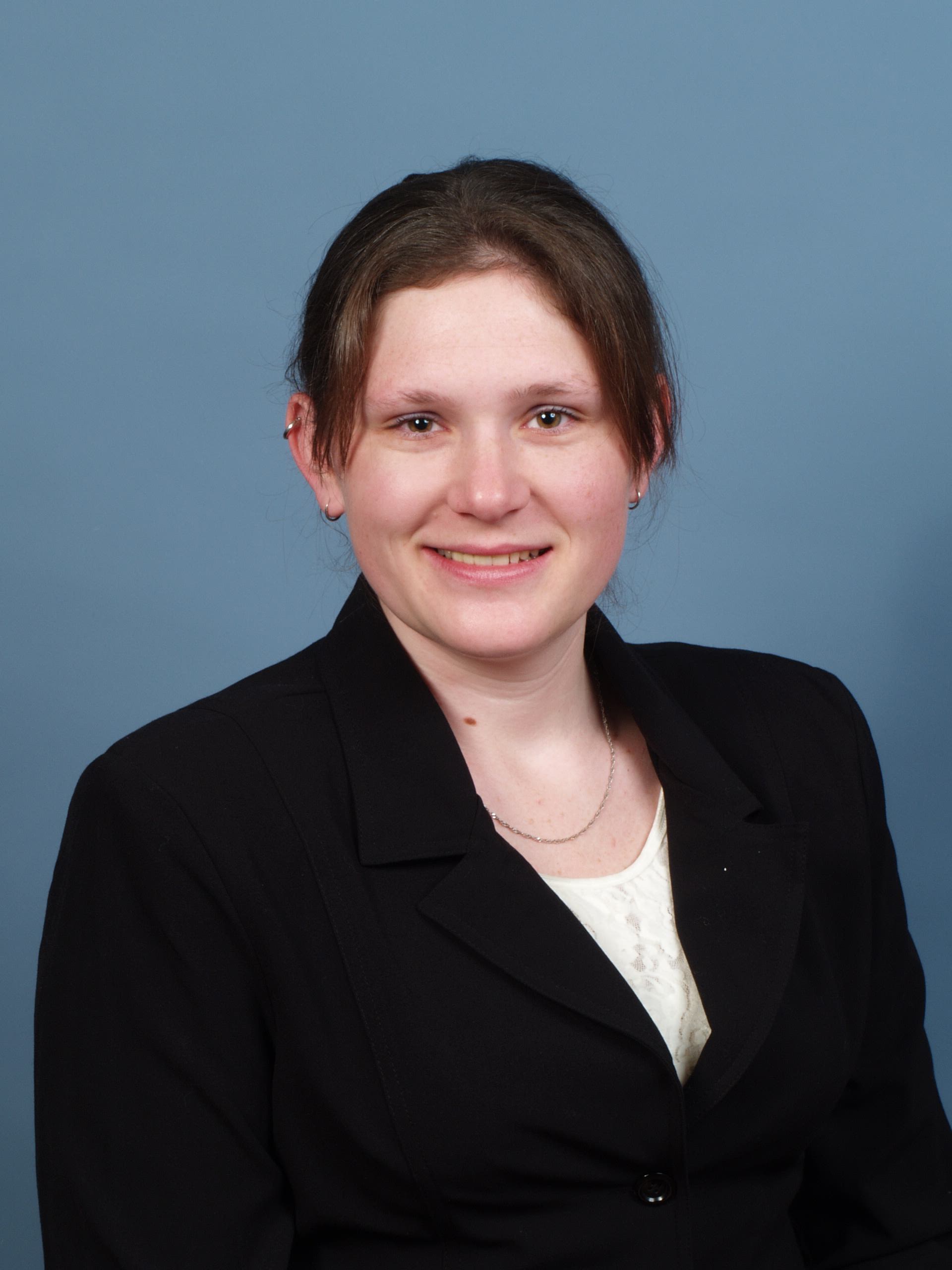
Robin Pool, NAIWE’s Sci-Fi/Fantasy Expert

August 7, 2026 Post a comment

We wanted to get to know Robin Pool (NAIWE’s Sci-Fi/Fantasy Expert) better, so last month we sat down with her. Here are some thoughts she shared with us.

You have a deep background in sci-fi and fantasy. What are the most common world-building mistakes you see indie authors make during a developmental edit?

My father is notorious for reading a half dozen guidebooks before he travels. He wants to know the details before he visits. Readers are not like that!

They are not reading a book to understand the history, socioeconomic system, recent secession crisis, outcome of the war, and environmental turmoil . . . before they even get to know the characters!

Indie authors often add details just to give their reader an overview, but that is not a good strategy, especially not early in the book! Imagine you got off a train in a strange city. What details would you discover first, and what would become clear later in your visit? Spin the details out slowly as they become germane to the story. Keep us in suspense. Save the bird’s eye view for the birds!

If it helps the author to have all of that written out ahead of time, put it in a separate preparation document so it’s not the first thing that comes out when you start the book.

Unless the beginning is already top notch, I advise authors to simply start writing the book wherever it seems right and come back and write a more dynamic beginning later. The beginning is so important that it should not be set in stone when you are just getting your feet wet with the plot or topic.

You can also lose readers by not connecting the details of the world to action or character growth or by setting too many world components against the character, taking away their “elbow room” to act. The world should be like one of those Ninja Warriors courses: plenty of challenges to help the character grow, but also a plausible way through.


How does your background in art history from Princeton influence the way you help authors visually map out or design their fictional worlds?

Before I studied art history, I thought the visual details in a portrait just set the general scene. But actually, they are carefully chosen. It’s not just a general flower, dog, or jewelry the artist wanted to paint; they’re specific images that would resonate with the intended audience. Visual details in a book should be the same.

Writers tend to write about what they think is interesting, or they want to give readers a general visual orientation. But it’s better to choose key details that support the reader’s experience. Don’t describe the wallpaper and the furniture and the lamps and the china. Describe how the delicate bone china teacup trembled in the daughter’s hand as the doctor carried the bowl of blood across the plush carpet of the drawing room. That creates tension and anticipation . . . and keeps the pages turning! Is the character wearing a fancy dress because she is a princess (boring!) or because the voluminous skirts allow her to hide a dagger underneath? Both can be true, but only one is worth writing about!


As a professional writing coach, what is the number one strategy you use to help an author overcome severe writer’s block or structural overwhelm

In my experience, if writer’s block cannot be alleviated by a couple of days off, a creative recharge, or a fresh perspective, there’s typically a deeper problem. My number one strategy is to ask questions to identify it.

Could be severe burnout, a mindset issue like perfectionism or excessive pressure, or even trouble getting back on the “writing horse” after a setback like a bad review.

Often, I find that writers don’t really understand their best writing energies. If writing is a good activity for you, there should be a way to make it pleasurable. However, most of us were trained in school to try to please others and keep grinding even when we didn’t like the work. If you don’t know how to make writing enjoyable, that’s where a professional writing coach can help! Don’t try to hammer down the door. Look for a key to open it.

Once people uncover the problem and retool their approach or mindset, severe blocks typically lift. That can take time, though, so it’s important to be patient with yourself and not cling to old assumptions and habits around productivity or performance. I encourage writers to get the support they need to find their happy writing flow.

——————

How do authors create characters with special abilities that readers can’t get enough of? Ever wondered why Latin incantations and super strength produce perennial best-sellers?

Learn to design compelling character abilities by using a simple 3-step process and avoiding a few basic pitfalls. For any Speculative Fiction genre (from Paranormal Romance to High Fantasy to Steampunk Sci-Fi, even Vampire Littles) this class will help you:

  • maximize your writing gold for your ideal audience
  • integrate abilities into genre expectations, character growth, world-building, and reader aspirations
  • avoid “puncturing the mystery balloon” and “pasting postage-stamps”
  • prevent abilities from feeling overpowered or overused
  • craft inclusive language and avoid sensitivity “hot spots”

This hands-on training includes workshopping case studies and editing real-life examples. Takeaways include a 3-page PDF with Do’s and Don’t’s, a 5-Step Design Framework, and a Compelling Characters Checklist to help you create from scratch or troubleshoot during revisions.

Learn to write special abilities that get your readers to finish a book, start the next one in the series, and recommend it to their friends. Make your words work like magic…or super strength! No Latin needed.

You can join in this conversation on August 20 at 2:00 pm eastern, when NAIWE will host a discussion on creating and developing characters and plots. The cost for NAIWE members is only $10! Nonmembers can join for $30. Register today!


Robin Pool loves the challenge and reward of sci-fi and fantasy. Take all the regular story hurdles – engaging plot, compelling characters – and add in an unfamiliar or even impossible world? That’s an uphill climb! But it’s so worth it! To get good at making the imaginary feel real, Robin has studied social, spiritual, and magic systems from around the globe, including learning Koine Greek and Arabic to read texts in the original. She is equally at home in story settings from pre-history to the speculative future. With decades of experience as a successful small business owner, Robin has coached over 3,000 clients to achieve their writing goals, including major publication credits, prizes, recognition, and readers. She is also an artist (blogging about creativity, knitting, and crochet @robinfpool on Substack), and she loves a good charity shop, especially if she can walk through a garden to get there.

Categories: Board of Experts, Events, Professional Development

Helen Armalas, NAIWE’s Style Guide Expert

July 3, 2026 Post a comment

We wanted to get to know Helen Armalas (NAIWE’s Style Guide Expert) better, so last month we sat down with her. Here are some thoughts she shared with us.

Authors have praised your ability to deliver constructively critical feedback directly and honestly during initial video consultations. How do you establish trust and set realistic expectations during that first 30-minute discovery call?

Establishing trust in an initial client call requires professionalism (fundamentally respect), being proactive and prepared (by reading sample material and writing out questions and potential next steps beforehand), and actively listening to the client. Since many authors are not versed in the language of and the different types of editing, I always ask them what their expectations are for an editing project, what specific concerns they have with their manuscript, what level of editing they desire (which typically tells me how receptive they are to criticism), and what questions they have for me. Listening to the client’s needs and drawing certain information out of them through having an authentic, honest conversation and by asking questions helps to get us on the same page so that we both have a clear understanding of what my services would entail for their specific manuscript.


Many student editors struggle to balance accuracy with professional speed expectations. What exercises or habits do you recommend to help novice editors increase their words-per-hour efficiency?

To become a faster editor while still being accurate, become fluent in Word’s different features and keyboard shortcuts. Also, use checklists and do multiple passes through the manuscript concentrating on different common mistakes (e.g. number formatting, capitalization, hyphen usage, etc.). As you move through a manuscript, you will become more acquainted with not only the author’s style but their mistakes (and people tend to make the same mistakes over and over again until they become aware of them). You can then search and correct these mistakes all in one pass, speeding up tedious editing. Also, if you find an error that you are having trouble finding the solution to, bookmark it and come back to it later. Instead of wasting time agonizing over one detail, keep moving. Often the answer comes to you as you work through the manuscript.


——————

Style sheets are important tools that editors create while copyediting manuscripts. When done well, they serve as a useful resource to the copyeditor, author, proofreader, and (if applicable) in-house production team to track a manuscript’s stylistic decisions, words and terms, citation preferences, and, in fiction, timeline and character development. In this webinar, we will go over how to make a style sheet for both fiction and nonfiction books using The Chicago Manual of Style as a primary resource. While covering the importance of using the style sheet as an aide to ensure consistency and correctness in manuscripts, we will also go over different Chicago Manual sections as well as other resources that are often referenced when copyediting manuscripts.

You can join in this conversation on July 22 at 2:00 pm eastern, when NAIWE will host a discussion on creating and using useful style sheets. The cost for NAIWE members is only $10! Nonmembers can join for $30. Register today!


Helen Armalas is a freelance editor currently residing in Chicago, Illinois. She provides a full range of editing services to traditional publishers, university presses, museums, independent authors, and business clients. A versatile editor, Helen edits nonfiction and fiction (adult and young adult), academic journals, museum-exhibition text, and really anything you throw at her. She is fluent in The Chicago Manual of Style, MLA, APA, AP, and the AMA Manual of Style. Before starting her own freelance editing business in 2023, Helen worked for over ten years in different professional service industries as an accountant and then executive assistant. Disenchanted with the business world, Helen quit her job and decided to pursue her lifelong dream of working with words and being her own boss. Helen has a BA in Art History, Theory, and Criticism from Columbia College Chicago and has completed the Editing certificate program, with additional coursework in medical editing and writing, from the University of Chicago. When she is not reading or editing, Helen is spending time with her two extra-spicy dogs, Louise and Jackie.

Categories: Board of Experts, Events, Professional Development

Ruth Thaler-Carter, NAIWE’s Networking Expert

April 3, 2026 Post a comment

We wanted to get to know Ruth Thaler-Carter (NAIWE’s Networking Expert) better, so last month we sat down with her. Here are some thoughts she shared with us.
What are the key factors for success in your specific niche?

My factors for success include responding promptly to client requests, doing high-quality work, looking for new ways to provide services, and using networking to enhance what I provide. I aim to provide more than the minimum for every assignment and request.

How can you update your offerings or roll out new phases of your business to reach more clients?

We can update our offerings and roll out new phases of our businesses by being plugged into what’s going on with colleagues and clients through networking, reading reputable publications for trends and to confirm facts, doing training to develop new skills and improve existing ones, and generally being proactive rather than reactive. Not everyone needs or wants to find more clients, but we can often expand our services to current clients as a way to expand our businesses.

Do you periodically contact everyone you’ve ever worked with to let them know you are available for new projects?

Contacting people we’ve worked with in the past is a great way to generate new projects. It’s also smart to let current clients know that we’re available as needed and to inform them of any new services that we provide.

——————

Many NAIWE members have been in business for several years, but nowadays, some might be feeling a little bored or burnt out, some have lost clients due to AI, some are experiencing stalemate, some seek new challenges — and all of us want to see our businesses not just survive but grow and expand. In our April webinar, longtime freelance writer/editor/proofreader Ruth E. Thaler-Carter will provide suggestions for taking an independent communications business to the next level and position ourselves for growth through new directions.

Ruth has been freelancing since high school and full-time since 1984. Over the years, she has expanded her writing business to include editing, proofreading, and speaking, and a diversity of topics. She has great insights into how to develop new skills and services to make an independent business go beyond static and toward sustainability.

She is the Networking member of the NAIWE Board of Experts, among several other association memberships, and will include perspectives on how active networking and membership can contribute to growing an independent communications business.

You can join in this conversation on April 16 at 7:00 pm eastern, when NAIWE will host a discussion on developing and expanding your freelance business. The cost for NAIWE members is only $10! Nonmembers can join for $30. Register today!


Ruth Thaler-Carter has been a full-time freelance writer, editor, proofreader, desktop publisher, and speaker for more than 40 years. She has been published locally, regionally, nationally, and internationally in, and does writing, editing, and proofreading for, publications, associations, nonprofits, websites, service firms, independent authors, and businesses. She sold her first freelance articles when she was still in high school. Often called the Queen of Networking, Ruth is active in about a dozen professional associations, serving as a newsletter editor, webmaster, publication author, speaker/presenter, blogger, program host or planner, and chapter leader. In 2006, Ruth launched the Communication Central Be a Better Freelancer conference — now cohosted with NAIWE — to help aspiring and established freelancers find greater success. Ruth is also owner and editor-in-chief of the An American Editor blog and owner of the Publishing with Flair publishing business. Her honors include member of her high school alumni hall of fame, in part for her publishing work and networking services; Writers and Books Big Pencil Award for teaching adults and contributions to the literary community; EFfie awards for writing, editing, and newsletters; an APEX award for feature writing; the Philip M. Stern Award of Washington (DC) Independent Writers for service to freelancers; and IABC/DC Communicator of the Year and Silver Quills for magazine writing and newsletters.

Categories: Board of Experts, Events, Professional Development

Freelance Writers: Achieving Success One Step at a Time

October 14, 2024 Post a comment

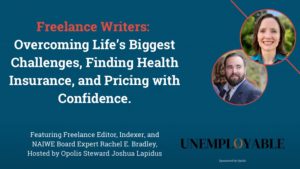
NAIWE’s Copyediting Expert Rachel Bradley was recently interviewed on “Unemployable,” the Opolis podcast.
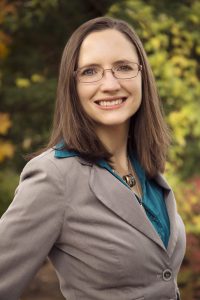
In this episode, Freelance Editor, Indexer, and NAIWE Board Expert Rachel E. Bradley opens up about her personal journey, sharing how she overcame the loss of her husband and found balance in her life with her new partner. Rachel offers invaluable advice on setting the right prices for your services, and taking daily steps toward achieving your business goals. Hosted by Opolis Steward Joshua Lapidus, this conversation is packed with insights and inspiration for freelancers looking to overcome challenges and build a successful writing career.

In this podcast, you can learn more about how being a NAIWE member gives you special access to health and payroll benefits!

Rachel E. Bradley holds a BS degree in paralegal studies from Northeastern State University in Oklahoma and graduated summa cum laude in 2006. She is a gold member of the Christian PEN: Proofreaders and Editors Network, is an established freelance editor with the Christian Editor Connection, is an instructor with the PEN Institute, is a judge for the Editors’ Choice Award, and has served as faculty for PENCON, the only conference for editors in the Christian market. After serving nine years in the legal field and becoming an advanced certified paralegal, Rachel started her business as a freelance editor and indexer. She now owns Revisions by Rachel Inc. In 2018, she lost her first husband, Matthew, after an intense battle with brain cancer. She now edits with a new understanding and a fierce compassion for people who feel broken and hurt. In celebration of continued life and hope, she became a licensed skydiver and takes to the skies with her rainbow canopy, “Promises,” any chance she gets. In early 2021, she asked God to choose her next husband. In an incredible tale of trusting God and giving him her yes without exception, she is now joyfully married to Alexander Bradley. They have been assigned the awe-inspiring and continually humbling task of raising two incredible children. Beyond reading, Rachel enjoys Bible studies, dancing during church worship, skydiving, swing dancing, rock climbing, reading, teaching, discussing important issues, watching Star Trek, sewing, cooking, Pilates, horseback riding, water sports, playing guitar, and snow skiing.

Categories: Board of Experts, Events, Professional Development

At-Will Training

August 16, 2024 Post a comment

NAIWE believes that training is essential to keep your skills up-to-date and even to gain new skills to boost your success.

With this in mind, NAIWE offers webinars each month, which members and nonmembers may attend, to become familiar with new subject matter, learn new skills, polish existing talents, and get their questions answered by experts.

All of these webinars are also recorded so you can access them in On-Demand Training at a time that is convenient to you!


April Michelle Davis, NAIWE Executive Director

April Michelle Davis has been the executive director of the National Association of Independent Writers and Editors (NAIWE) since 2018. Prior to that, she was NAIWE’s Social Media Marketing Expert. NAIWE is an association that focuses on career building for writers, editors, and other professionals in the publishing industry by developing multiple streams of income; it helps its members market their products and services through social media, newsletters, and more.

She is also the coordinator for the Virginia chapter of the Editorial Freelancers Association, a lifetime member of the American Copy Editors Society, and a freelance editor, indexer, proofreader, and author. April Michelle has taught courses through her own company, Editorial Inspirations, as well as for associations and colleges on topics such as editing, indexing, grammar, writing, and creating macros.

Her credentials include a master’s degree in publishing from George Washington University and a bachelor’s degree in English from Messiah College, as well as certificates in editing (University of Virginia), book publishing (University of Virginia), and professional editing (EEI Communications).

April Michelle has shared her insights about her career development by contributing quotes and vignettes to several books. She has presented sessions on various editorial topics to many groups, including the Virginia Writers Club, the Communication Central conference, Randolph-Macon College, the Christian PEN: Proofreaders and Editors Network, the EFA, Copyediting newsletter, RavenCon, and the Hanover Book Festival. In addition, April Michelle has published four books.

Categories: Member Benefits, Professional Development

Jake Poinier, NAIWE’s Freelance Expert

July 5, 2024 Post a comment

We wanted to get to know Jake Poinier (NAIWE’s Freelance Expert) better, so last month we sat down with him. Here are some thoughts he shared with us.

What considerations should be factored into every price?

The more detail you can put in your calculation, the better. At a minimum, you want to know the length/format/content you are dealing with, what you’re expected to do to it, communications/meeting time, revisions anticipated, and deadline. A proper estimate also needs to incorporate a ton of gray areas. The more unknowns there are, the more conservative you should be about estimating–which is particularly true with new, unproven clients.


Is it ethical for freelancers to revisit a price in the midst of a project?

Everything about price should be spelled out and agreed upon prior to the start of the project; you can’t just change a price midstream because the project (or client!) turns out to be more challenging than you estimated. One of those elements would include price implications of tasks that are outside of the scope of work. So, if you agree that a project is a 5-page website and the client expands that to 10 pages, you need to have a contract that defines what happens–and you should be very clear with the client when they are making requests outside the scope. In other words, you don’t want to just surprise them with a bigger invoice.


Should freelancers set their prices to be comparable to other freelancers’ offering the same services?

In business, there’s no requirement to be comparable, so I’d say “should” doesn’t really apply. If you personally know freelancers who have similar skills, experience, and client types, however, you’re likely to be in the same range, simply because that’s what the market is willing to bear. This is why I don’t put much faith in industry surveys–you have no idea who is answering them.

——————

Freelance pricing isn’t a one-size-fits-all proposition — and overlooking the nuances can leave you feeling overworked and underpaid. In this webinar, Jake “Dr. Freelance” Poinier discusses the principles of estimating, incorporating a range of diverse practice examples with real-world project descriptions and client scenarios.

You can join in this conversation on July 25 at 2:00 pm eastern, when NAIWE will host a discussion on estimating your projects. The cost for NAIWE members is only $10! Nonmembers can join for $30. Register today!


Jake Poinier made the leap into freelance writing and editing in 1999 after a decade of positions in the publishing industry, giving him key insights from both sides of the desk. As the founder and owner of Boomvang Creative Group, he has worked with a diverse array of Fortune 500 and small businesses, consumer and trade magazines, and independent authors. Jake is committed to helping freelancers improve their businesses and shares his knowledge and experiences frequently as a speaker at industry conferences, through webinars, and on his blog.

Categories: Board of Experts, Events, Professional Development

Ruth Thaler-Carter, NAIWE’s Networking Expert

June 7, 2024 Post a comment

We wanted to get to know Ruth Thaler-Carter (NAIWE’s Networking Expert) better, so last month we sat down with her. Here are some thoughts she shared with us.

How many questions should be asked in an interview?

There’s no standard limit for the number of questions to ask someone in an interview. Sometimes the client will provide the questions they want to answer; sometimes the interviewer handles that aspect. I always prefer to ask more questions than I might need, even if that means having to spend some time on editing responses to fit a word limit. I love it when there’s no word limit! The absolute minimum would be three questions: Please confirm your name, title, and affiliation. What is important about your job or project? What (else) would you like our readers to know about you/your topic?


As the interviewee, how can you get the interviewer to ask the questions you want to answer?

The interviewee can say something ahead of time, by email or phone, about the topics you see as most important to cover. Let the interviewer know something like, “I’m most passionate about …,” “Let’s be sure to include X as my favorite [whatever],” “I think achievement X is my most important contribution,” etc.


What ways can interviewees get selected for an interview?

Being visible in social media and professional association outlets, having a blog with regular posts, speaking at events, presenting webinars, disseminating press releases about achievements, writing letters to the editor with opinions about local or national issues, and similar outreach can get attention that leads to interviews. You can even contact someone with a blog or publication where you’d like to be interviewed and let them know what you would like to talk about and why it might be of interest to their audience. In turn, the interviews can result in more invitations to speak, contribute blog posts, participate in events, and so on. It’s a self-propelling process or cycle. All of these activities feed each other and help establish you as an expert.

——————

Interviews are key to a variety of writing and editing work. Whether you’re doing an interview with a subject for a project or are the subject of one yourself, interviewing is an art and a skill. This webinar will focus on how to craft interviews that make the topic and subject come to life, along with tips on being a better subject oneself.

Ruth E. Thaler-Carter has been interviewing experts and colleagues on a wide range of topics for many years and has been the subject of varied interviews herself.

You can join in this conversation on June 24 at 7:00 pm eastern, when NAIWE will host a discussion on becoming an expert interviewer. The cost for NAIWE members is only $10! Nonmembers can join for $30. Register today!


Ruth Thaler-Carter has been a full-time freelance writer, editor, proofreader, desktop publisher, and speaker for more than 30 years. She has been published locally, regionally, nationally, and internationally in, and does writing, editing, and proofreading for, publications, associations, nonprofits, websites, service firms, independent authors, and businesses. She sold her first freelance articles when she was still in high school. Often called the Queen of Networking, Ruth is active in about a dozen professional associations, serving as a newsletter editor, webmaster, publication author, speaker/presenter, blogger, program host or planner, and chapter leader. In 2006, Ruth launched the Communication Central Be a Better Freelancer annual conference, now cohosted with NAIWE — to help aspiring and established freelancers find greater success. Ruth is also owner and editor-in-chief of the An American Editor blog and owner of the A Flair for Writing publishing business. Her honors include member of her high school alumni hall of fame, in part for her publishing work and networking services; Writers and Books Big Pencil Award for teaching adults and contributions to the literary community; EFfie awards for writing, editing, and newsletters; an APEX award for feature writing; the Philip M. Stern Award of Washington (DC) Independent Writers for service to freelancers; and IABC/DC Communicator of the Year and Silver Quills for magazine writing and newsletters.

Categories: Board of Experts, Events, Professional Development

Karin Beery, NAIWE’s Fiction Expert

May 3, 2024 Post a comment

We wanted to get to know Karin Beery (NAIWE’s Fiction Expert) better, so last month we sat down with her. Here are some thoughts she shared with us.

Do beta readers define themselves by genres?

It can be helpful to find beta readers in your genre, but it’s not necessary. If you know which questions to ask, you can assist anyone to become a useful beta reader.


Do you suggest working with more than one beta reader on the same project?

Absolutely. Even if you’re working with an experienced beta reader, everyone has personal preference. I recommend at least three: if one person doesn’t like something, that could be taste; if two people don’t like it, there might be a problem with the writing.


At what point do you begin to work with beta readers?

After you’ve finished editing and revising your first draft.

——————

Beta readers can help authors clean up and strengthen their manuscripts without hiring an editor, but like editors, not all beta readers are the same. In this webinar, find out what to expect from beta readers, how to find good ones, and how you can help them help you polish your manuscript.

You can join in this conversation on May 20 at 2:00 pm eastern, when NAIWE will host a discussion on turning your friends and family into beta readers. The cost for NAIWE members is only $10! Nonmembers can join for $30. Register today!


Karin Beery is a published author and editor with experience in traditional and self-publishing, freelance editing, and editing for publishers. She is an active member of Advanced Writers and Speakers Association, Christian Authors Network, and the Christian Proofreaders and Editors Network, as well as a PEN Institute instructor. Her specialty is substantive fiction editing with an emphasis in romance and women’s fiction.

Categories: Board of Experts, Events, Professional Development

Marcia Rosen, NAIWE’s Public Relations and Book Marketing Expert

April 5, 2024 Post a comment

We wanted to get to know Marcia Rosen (NAIWE’s Public Relations and Book Marketing Expert) better, so last month we sat down with her. Here are some thoughts she shared with us.

What is a characteristic of a detective that will aid in developing a memoir?

Persistent, determined, willing to ask questions to anyone who might have answers to knowing the truth. A good detective needs to be tenacious, patient, look at the truths of a situation and ask questions that get to the heart of the matter. These qualities are exactly what is needed to write a good memoir. How do you search for clues about your history and their impact on your life?


Are there characteristics or situations for a detective that do not align with developing a memoir?

Of course, being involved in murder cases for example. Putting your life in danger when working on a case.


Is there a particular detective skill that is essential in the prep work for a memoir?

Willingness to spend time searching for answers to your questions about your life and history. Asking serious questions about your life.
n
——————

A good detective needs to be tenacious and patient. A good detective needs to look at the truths of a situation and ask questions that get to the heart of the matter. Those same skills are needed to write a good memoir. How do you search for clues about your history and their impact on your life?

You can join in this conversation on April 30 at 7:00 pm eastern, when NAIWE will host a discussion on becoming the detective for your novel. The cost for NAIWE members is only $10! Nonmembers can join for $30. Register today!


Marcia Rosen (aka M. Glenda Rosen) is an award-winning author of eleven books including her newest one, An Agatha, Raymond, Sherlock and Me Mystery: Murder at the Zoo plus The Senior Sleuths, Dying To Be Beautiful Mystery Series, and The Gourmet Gangster: Mysteries and Menus (menus by her son Jory Rosen). She is also author of The Woman’s Business Therapist and award-winning My Memoir Workbook and has given memoir writing presentations and classes for close to 20 years. She has assisted many authors in developing, writing, publishing, and promoting their books. For 25 years, she was the owner of a successful national marketing and public relations agency. Marcia has frequently been a speaker or program moderator at organization meetings and conferences, bookstores, libraries, and Zoom programs. Topics she has taught and presented over the past 20 years include Encouraging the Writer Within You, Marketing for Authors, Writing Mysteries…Not A Mystery, Writing Your Memoir, and recently Anatomy of Writing a Murder. Many articles on these topics have been published on mystery reader blogs and in newsletters and magazines and her newest articles include Location, Location, Location: Murders Have Their Places; Hearing Voices of Past Famous Detectives: Their Impact and Influences; and Writing Mysteries at a Zoo: With Caution. She is a member of Sisters in Crime National and New Mexico (Croak & Dagger), Southwest Writers, New Mexico Book Association, Women Writing the West, Public Safety Writer’s Association, Women’s National Book Association, and National Association of Independent Writers and Editors.

Categories: Board of Experts, Events, Professional Development

Susan Treadgold, NAIWE’s Personal Energy Expert

March 1, 2024 Post a comment

We wanted to get to know Susan Treadgold (NAIWE’s Personal Energy Expert) better, so last month we sat down with her. Here are some thoughts she shared with us.

Are the contents of this webinar just for women?

The content of the webinar is targeted at women, but men are welcome and will also benefit.


When many of us think of energy, we relate it to physical activities. What makes up the energy that you will be talking to us about?

Everything is energy. Anything that we come in contact with — be it food, a thought, or another person — it all either enhances or detracts from our energy.


Is it true that taking small actions are better than taking no actions? How do you recommend starting to build energy in our day?

Taking action and creating small habits that we continue to “stack” is the path to exponential energy. It all starts with a morning routine — to set up your day, week, month, and life — that you don’t need a vacation from!

——————

Join us for a masterclass with best-selling author Susan Treadgold as she unveils the secrets behind the six habits of high-performing women, with a focus on ENERGY. Susan Treadgold, international executive coach and an award-winning speaker, will share her wisdom gleaned from two decades in investment banking and a phenomenal 15-year coaching career.

Are you tired of feeling drained and overwhelmed? Ready to banish burnout once and for all? Drawing on a pool of extensive research driven, science-backed tools and strategies, Susan Treadgold will equip you with the keys to identify, master, and turbocharge your energy levels.

Brace yourself for a live event that will change the game.

You can join in this conversation on March 27 at 2:00 pm eastern, when NAIWE will host a discussion on developing more energy for every day. The cost for NAIWE members is only $10! Nonmembers can join for $30. Register today!


Susan Treadgold is a holistic high-performance coach, speaker, and multiple #1 best-selling author with nearly two decades of investment banking experience at Morgan Stanley, Merrill Lynch, and Citigroup. She empowers women to have more energy and success with the use of science-backed high-performance habits, executive presence, training and a personally curated longevity portfolio of cutting edge biohacking products. She is an award-winning artist, host of The High-Performing Woman talk show, and on the leadership committee of 5050 Women on Boards. She is a proud mother of two teenagers. Family is her love language, and as a board member of Roots of Promise, she is passionate about helping less fortunate kids.

Categories: Board of Experts, Events, Professional Development

  • 1
  • 2
  • 3
  • 4
  • Next Page »

Recent Posts

  • Member Benefit: Discount on ProWritingAid
  • Book Review: Vademecum of English: A Complete Reference Guide for Teachers and Learners
  • Robin Pool, NAIWE’s Sci-Fi/Fantasy Expert
  • Days to Celebrate in August
  • Member Post: Am I a Writer or Not?

Categories

Links

  • Member Area
  • NAIWE Bookstore
  • NAIWE- The Association Site
  • Words Matter Week

Meta

  • Log in
  • Entries feed
  • Comments feed
  • WordPress.org

Latest Posts

Member Benefit: Discount on ProWritingAid

August 14, 2026

Book Review: Vademecum of English: A Complete Reference Guide for Teachers and Learners

August 10, 2026

Robin Pool, NAIWE's Sci-Fi/Fantasy Expert

August 7, 2026

Days to Celebrate in August

July 24, 2026

Member Post: Am I a Writer or Not?

July 20, 2026

Micro Niche in a Macro World

July 17, 2026

Contact Us

  • 804-476-4484
  • P.O. Box 412
    Montpelier, VA 23192-0412
Facebook Instagram Linkedin twitter

© NAIWE. All rights reserved. Designed by My House of Design.