
National Association of Independent Writers & Editors
Facebook Instagram Linkedin twitter

Search

SubscribeLogin

  • About
    • About NAIWE
    • Board of Experts
    • Amazon-Affiliate Book
    • FAQs
    • Advertising
  • Join Us
    • Join NAIWE
    • Benefits
    • Reasons to Join an Association
  • Training
  • Find a Professional
  • Blog
  • News & Events
    • The Edge
    • Conference
    • Podcasts
    • Summer Challenge
    • Words Matter
      • Words Matter Week
      • How to Participate
      • Media
  • Post a Job
  • Contact
  • Member Sites

Greg Smith, The Novel Writing Expert

September 10, 2021 Post a comment

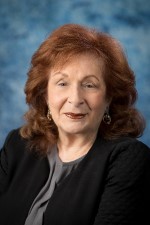
We wanted to get to know Greg Smith (NAIWE’s Novel Writing Expert) better, so last month we sat down with him. Here are some thoughts he shared with us.

Is this a guide to follow at will?

The Agile Writer Method is something you can do at your own pace and on your own schedule. However, it is structured for 10 pages per week for 25 weeks. I recommend you find two critique partners and have weekly meetings where you review your weekly 10-page output. This creates a sense of accountability that motivates you to write each week. However, you can follow the program and write your novel at whatever pace works best for you.

Do all the steps need to be in order to write a good novel?

Yes, and no. The big idea behind the Agile Writer Method is successive refinement. You’ll start with a single sentence describing your story. Then write an elevator pitch (one paragraph). Then a synopsis (one page). During the plotting phase, you create an eight-stage Storyboard (or outline) that structures your story. Then you write 10 pages a week for 25 weeks. So, yes, there is a progression that you need to follow. However, many Agile Writers will write their beginning, then their ending, and then fill in the middle! So, it’s a pretty flexible method.

Do you offer a template?

Yes, there are templates for the Hero Abstract, the Story Abstract, and the eight-stage storyboard (or outline). These templates will get you started. Most Agile Writers are pretty creative; they’ve embellished and augmented the templates to suit their needs. As I have said, The Agile Writer Method is very flexible!
——————

Storytelling is as old as the human race. Over the ages we’ve come to expect a pattern to storytelling. In this webinar, Greg Smith lays out this time-worn pattern. Based on Joseph Campbell’s Hero’s Journey, mythology, psychology, and screenwriting techniques, the “The Eight Stages of the Novel” will help you plot your story before you put pen to paper.

You can join in this conversation on September 13, at 8:00 pm eastern, when NAIWE will host a discussion on writing your novel. The cost for NAIWE members is only $10! Non-members can join for $30. Register today!
Categories: Board of Experts, Events, Writing

Education with an Emphasis

August 21, 2021 Post a comment

No matter the service you offer in the publishing industry, you are a business owner and, therefore, a professional. As a professional, your profession requires education and skill.

When offering editorial services, I find that I regularly educate authors in the difference of a friend reading their work and of myself (a professional with education and experience in the industry who has reviewed numerous manuscripts and seen their success or failure and the reasons behind that outcome).

Though you may have taken classes when you first began to increase your skill level, it is always a good idea to regularly attend classes or conferences to keep your skills up-to-date. You can never know it all, and even if you feel you know everything about your specific skill, your clients will benefit from your learning about other areas within the publishing industry.

Having obtained a master’s degree in publishing, I took courses in book design, copyright, and many other topics that I do not offer services in. Plus, having worked in-house, I was able to see the bigger picture of the publishing process, and where my services fit in the process. And these insights have benefitted my clients because I am more knowledgeable and able to offer additional assistance or advice outside of my provided service.

Having seen the importance of education, I have put a great emphasis on it within NAIWE. We record all webinars and make them available to you on demand. And though the topic of every recording may not be directly related to the services you offer, the knowledge you gained may prove beneficial for your clients when you apply it to their needs.


April Michelle Davis, NAIWE Executive Director

April Michelle Davis has been the executive director of the National Association of Independent Writers and Editors (NAIWE) since 2018. Prior to that, she was NAIWE’s Social Media Marketing Expert. NAIWE is an association that focuses on career building for writers, editors, and other professionals in the publishing industry by developing multiple streams of income; it helps its members market their products and services through social media, newsletters, and more.

She is also the coordinator for the Virginia chapter of the Editorial Freelancers Association, a lifetime member of the American Copy Editors Society, and a freelance editor, indexer, proofreader and author. April Michelle has taught courses through her own company, Editorial Inspirations, as well as for associations and colleges on topics such as editing, indexing, grammar, writing, and creating macros.

Her credentials include a master’s degree in publishing from George Washington University and a bachelor’s degree in English from Messiah College, as well as certificates in editing (University of Virginia), book publishing (University of Virginia), and professional editing (EEI Communications).

April Michelle has shared her insights about her career development by contributing quotes and vignettes to several books. She has presented sessions on various editorial topics to many groups, including the Virginia Writers Club, the Communication Central conference, Randolph-Macon College, the Christian PEN: Proofreaders and Editors Network, the EFA, Copyediting newsletter, RavenCon, and the Hanover Book Festival. In addition, April Michelle has published three books.

Categories: Events

MJ Courchesne, The Copyright & Permissions Expert

August 13, 2021 Post a comment

We wanted to get to know MJ Courchesne (NAIWE’s Copyright & Permissions Expert) better, so last month we sat down with her. Here are some thoughts she shared with us.

Should a freelancer expect to sign a work-for-hire agreement for each job?

It’s good practice to sign some sort of contract before starting a new job. Whether it’s a work-for-hire or another arrangement is really up to the freelancer. If you’re new to the field, you may wish to sign a work-for-hire to get your name out there and establish your reputation in a certain topic area. If you’re an established writer, you may wish to push for a royalty or another arrangement wherein you maintain your copyright. But either way, a contract between you and your client is good business so that both you and your client understand the full terms of your arrangement from who owns the work to how payments should be made.

Can you use your own contract in lieu of using the other party’s?

It may depend on the client. If it’s a small company, they may be amenable to signing a contract that you prepared. If it’s a well-established corporation, however, they may very well insist you sign their contract.

What language in a contract would cause you not to sign it?

This is tricky because it really depends upon the nature of the job. Obviously, if you are interested in maintaining your copyright, you will want to avoid any transfer of copyright language. Beyond that, it really depends upon your goals and business needs for the job.
——————

This interactive webinar will feature some sample agreements and sources for templates that the writer might find useful during their writing career. What does a work-for-hire generally look like? What should you expect in a standard trade publishing contract? How common are NDAs in the publishing world and why might you need one? How do you format a simple permission request? Who can you reach out to for help when reviewing a contract? Be ready to take notes and bring your questions for this informative session on contracts and agreements.

You can join in this conversation on August 31, at 7:00 pm eastern, when NAIWE will host a discussion on writing agreements. The cost for NAIWE members is only $10! Non-members can join for $30. Register today!

Categories: Board of Experts, Events

2021 Summer Challenge

August 6, 2021 Post a comment

This summer, NAIWE is challenging you and your fellow NAIWE members to be the best version of yourselves. You may personalize this challenge to fit your needs and summer goals. Choose a book to read that you classify as a self-help book even though its genre is far from that. Choose a project that has been nagging at you but will also produce great reward upon completion. And finish the challenge by spending some quality time with our experts learning how they mastered creating multiple steams of income. Throughout the challenge, be true to yourself and your goals!

There are three parts to this challenge:

  1. Read one book that will stretch your mind and inspire your creative spirit. The 2021 Summer Challenge is a great way for you to catch up on those business reads that have been piling up.
  2. Finish one project that’s been nagging at you for longer than you care to admit. This is not so much about the length of time to complete the project as it is about finishing what you started. (For some motivational tips, listen to NAIWE’s Productivity Expert Meggin McIntosh’s teleclass on How to Complete Your Projects, Especially the Ones that Have Been Bugging You.)
  3. Brainstorm a new project that will bring you an additional stream of income, then take the first step to make it happen. NAIWE is willing to be your partner and advocate to bounce ideas off of.

After you read your book selection, leave a comment below with the name and author of the book and your take away from this book so others will know if they should read this book.

Categories: Events

2021 Summer Challenge

July 26, 2021 Post a comment

This summer, NAIWE is challenging you and your fellow NAIWE members to be the best version of yourselves. You may personalize this challenge to fit your needs and summer goals. Choose a book to read that you classify as a self-help book even though its genre is far from that. Choose a project that has been nagging at you but will also produce great reward upon completion. And finish the challenge by spending some quality time with our experts learning how they mastered creating multiple steams of income. Throughout the challenge, be true to yourself and your goals!

There are three parts to this challenge:

  1. Read one book that will stretch your mind and inspire your creative spirit. The 2021 Summer Challenge is a great way for you to catch up on those business reads that have been piling up.
  2. Finish one project that’s been nagging at you for longer than you care to admit. This is not so much about the length of time to complete the project as it is about finishing what you started. (For some motivational tips, listen to NAIWE’s Productivity Expert Meggin McIntosh’s teleclass on How to Complete Your Projects, Especially the Ones that Have Been Bugging You.)
  3. Brainstorm a new project that will bring you an additional stream of income, then take the first step to make it happen. NAIWE is willing to be your partner and advocate to bounce ideas off of.

Leave a comment below with your URL so that others who take the challenge can cheer you on as well.

Categories: Events

Brian Schwartz, The Self-Publishing Expert

July 9, 2021 Post a comment

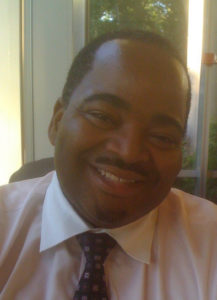
We wanted to get to know Brian Schwartz (NAIWE’s Self-Publishing Expert) better, so last month we sat down with him. Here are some thoughts he shared with us.

What makes a good review?

A good review helps target the book for the right reader while steering the wrong reader away. I often tell authors “The way you get a good review is by putting your book in the hands of the right reader. Bad reviews are the result of putting it into the hands of the wrong reader.” If your reviewer is open to advice, provide them with keywords you know others are likely to use in a search since reviews are also indexed by search engines. An ideal review is 1–2 paragraphs and mentions the main reason why they read the book and what they got out of it. People are skeptical that a review is legit when the review is only 1–2 sentences.

Can a book ever have too many reviews?

Never! Caste: The Origins of Our Discontents has over 31,000 ratings on Amazon with an average of 4.8/5 stars.

Can you sensor or pick and choose reviews?

No, and you should never engage with a reviewer. In one instance, I did reach out to a 1-star reviewer and offered to compensate her for her time because the author was distraught. Some companies who sell products on Amazon may offer a bad reviewer a full refund if they are willing to take down their review. But this is not advisable. I regret doing it myself as it tarnishes the integrity of the entire system and you are setting yourself up for scammers who just want free products. The truth is that the more people you ask, the more likely you will get a bad review. But a few bad reviews can raise the legitimacy of the others and if the bad review steers the wrong reader away from your book, then it’s actually done you (and the reader) a service. I tell authors that for every one bad review, they should try to offset it with two positive ones.
——————

What’s the one thing you can do each day to grow your sales? Ask for a review. In this webinar, Brian will empower you to build the essential foundation behind any successful book: a strategy to continually ask for reviews. Before you spend a dime on advertising, your book must have reviews. While Amazon reviews get all the attention, there are many other ways you can leverage reviews elsewhere.

Key takeaways you can expect from attending this webinar:
• The indicators that Amazon uses to remove reviews
• The importance of “vanilla urls” when pointing to Amazon
• The 3 key elements of an effective review
• Using Amazon reviews in your marketing materials
• How many reviews you need
• When a bad review can be good
• How to avoid getting banned by Goodreads
• What a successful reviewer outreach, tracking & follow-up system looks like
• How to find over 100 potential reviewers in your own network.

After helping hundreds of authors over the past 10+ years, Brian has seen firsthand what works and what doesn’t. How do you get a good review for your book? You put your book in the hands of the right reader. Amazon.com began with a single line of code. Similarly, the success of any title began with a single review.

You can join in this conversation on July 28, at 6:30 pm eastern, when NAIWE will host a discussion on book reviews. The cost for NAIWE members is only $10! Non-members can join for $30. Register today!

Categories: Board of Experts, Events, Marketing, Writing

Tamian Wood, The Book Cover Expert

June 11, 2021 Post a comment

We wanted to get to know Tamian Wood (NAIWE’s Book Cover Expert) better, so last month we sat down with her. Here is what she shared with us.


What is color psychology, and is this just for book covers?

Color psychology is the study of hues and shades as a determinant of human behavior. It is not just for book covers. Color psychology is regularly used in all kinds of marketing applications, such as product packaging, corporate branding, television commercials, automotive design, in the clothing industry, interior design, furniture design, just to name a few.


How are cultural responses determined?

Cultural responses are set upon us by our cultural environment. If your parents, siblings, neighbors, friends believe that a certain color is representative of XXX, then you will likely have the same reaction to that color stimulus. For example, a Western cultural response to mourning is to wear black or dark somber colors.


How can color affect our brain?

A human’s occipital lobe is mostly associated with color visualization. The colors green and blue, which are the most common colors in nature, can provide healing to a stressed-out mind. Thus the color blue is widely used in mental therapy to reduce stress and reduce the rate of suicide. Japan has gone as far as painting the train station walls with the color blue and found it has helped to reduce suicide in public spaces by 75%.

——————

Have you ever wondered what makes a person pick one product over another? Many times, it’s the result of good design. In this webinar you’ll learn a bit about the basics of color psychology, including cultural responses and the language of color.

We’ll also explore the transformative magic of typography and how you can use it, in varying ways, to change the message of your words. I’m not talking about reading the words themselves, but rather reading the mood of your font choice. And last, we’ll take a dive into tracking, kerning, and leading. OH MY!

You can join in this conversation on June 21, at 2 pm eastern, when NAIWE will host a discussion on typography. The cost for NAIWE members is only $10! Non-members can join for $30. Register today!

Categories: Board of Experts, Events, Marketing

Ruth Thaler-Carter, The Networking Expert

May 14, 2021 Post a comment

We wanted to get to know Ruth Thaler-Carter (NAIWE’s Networking Expert) better, so last month we sat down with her. Here is what she shared with us.


What do new and existing writing businesses have in common?

New and existing writing businesses probably share a common goal: for the owner’s words, thoughts, and perspectives to find an audience and outlet. Their owners might be at different stages of creativity, visibility, or success, but every writer wants—even needs—to be seen and heard.


Please explain why all writing is not business material.

A lot of writing isn’t oriented to business use, starting with poetry, fiction, plays, and memoir, even though a writing business can be about getting non-business material out into the world. Where the concept of a “business” comes into play is in applying business-like principles to getting the work done, finding agents and outlets for the work, responding to editing and proofreading input, getting paid, and related details.


Do audiences and readers carry the same weight in writing businesses?

Readers are audiences! Whether someone is writing a novel or a press release, a poem or a white paper, a play or a case study, a how-to book or a personal blog post, we all want what we write to be seen and appreciated. Clients might be more demanding than readers, but every audience or reader matters. We want everyone who sees our writing to understand it, respond to it positively by publishing reviews or acting on it somehow, recommending it to others, and reading or buying the next piece we write.

——————

Starting a writing business is exciting and challenging. Writing is a creative act. Having a writing business is a practical process. Get some practical, effective tips from a long-time, award-winning freelance writer/editor in this session. Learn about types of writing that can be the basis of a business; getting experience; finding outlets, audiences, readers and clients; avoiding scams; and more. Whether you want to write and publish books or articles, fiction or nonfiction, this session will get your writing business off to a strong start (and enhance an existing one).

You can join in this conversation on May 20, at 7 pm eastern, when NAIWE will host a discussion on giving your writing business a strong start. The cost for NAIWE members is only $10! Non-members can join for $30. Register today!

Categories: Board of Experts, Events, Writing

Kristen Fischer, The Journalism Expert

April 9, 2021 Post a comment

We wanted to get to know Kristen Fischer (NAIWE’s Journalism Expert) better, so last month we sat down with her. Here is what she shared with us.


What types of questions add to the story?

Personally, I approach every story as if another outlet is covering it, because that’s likely happening. I’m always on the lookout for a different quote or a different angle to explore in addition to that main news. For me, questions that add to a story go beyond the who-what-when-where-why. Depending on the story, the type of story (say, feature versus exclusive breaking news), and the audience, questions that add to the story always dig a little deeper. And you have to do so in a way that doesn’t cause the source to clam up, so you have to build that objectivity and trust, and avoid being accusatory. That’s why I often go beyond the “why do” to “why don’t” types of questions. That prompts the source to give you more information and really explain it in a way that gives the reader the whole picture. It’s hard to give a specific question, but I believe that by being aware of the different kinds of questions we can ask, it will give reporters an edge.


What are some types of open-ended questions?

I like to ask “what does that look like” to get the source defining what we can expect–other than “we’ll see” or “it’ll be good or bad.” It forces them to give more detail. Then if they do, you can go from there with any additional questions. I also like to ask sources to explain something to me like a layperson if something is confusing, so they explain things and both I and the reader understand the point they are trying to convey. I like to ask “what’s next” in certain cases so the source may speculate on the implications of a news development–that’s the kind of digging that takes my story a step further and sets it apart from the competition. I rarely ask a yes/no question.


Is there a situation when a yes-or-no question works best?

Yes, definitely. Though I rarely ask them (or rarely only ask a yes-or-no question), these questions are great when you want a source’s stance on something and they are not being clear. Make your question clear and you may get that yes-or-no answer that in many cases gets a source to go on the record with their stance on something. Otherwise, yes-or-no questions don’t lead into much of a response. There’s definitely a type of story that they are imperative, and in other stories, they’re not as relevant. You have to know when to ask a yes-or-no question, in terms of thinking of the primary objective of your article. If it’s to get a lawmaker to state their stance on something, it certainly fits. But I think we owe it to readers to go beyond that and understand the sources reasoning for that response as well.

——————

Journalists have to guide an interview, and how they do it can make or break a story. In this webinar, we’ll explore different tactics for asking questions that receive more open responses, and produce better sound bites. Come prepared with one example of a great question you’ve asked in the past, and one that you thought was great yet fell flat.

You can join in this conversation on April 14, at 10 am eastern, when NAIWE will host a discussion on asking better interview questions. The cost for NAIWE members is only $10! Non-members can join for $30. Register today!

Categories: Board of Experts, Events, Writing

Jake Poinier, The Freelance Expert

March 12, 2021 Post a comment

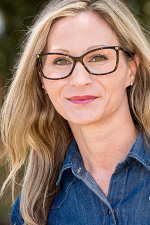
We wanted to get to know Jake Poinier (NAIWE’s Freelance Expert) better, so last month we sat down with him. Here is what he shared with us.
 

Are there standards to setting the fee structure?

Setting a freelance fee structure is a taste of the Wild West. The simplest calculation is to know your hourly rate and accurately assess how long the tasks will take, but there are countless factors that can influence what you charge. It’s also important to consider fee structure from the client’s perspective; what makes sense for one might not appeal to another. If a client wants a firm project estimate, you shouldn’t suggest an hourly rate or per-word rate, and vice versa.


What information on an industry rate sheet is helpful?

Industry rate sheets give basic, broad guidance on what others are charging, so they’re arguably most helpful for freelancers who are new and have absolutely no idea where to start. The challenge is that you don’t know what the inputs were: What types of industries, projects, and clients? What part of the country? How many years has someone been freelancing, and how skilled are they? A successful, experienced freelancer will often have rates above the upper range shown in industry charts.


What are some tips for how to properly use an association survey?

An association survey can be one of the components to create your rates, but should not be the only one. Do the math on what you would like to earn annually, and break it down to an hourly rate or range. Networking with other freelancers is an easy way to check your math.

——————

As a freelancer, pricing and estimating your services properly is the foundation of your long-term financial prosperity and day-to-day psychological well-being. In this webinar, Jake “Dr. Freelance” Poinier offers a strategic, value-focused approach to setting your fee structure, taking into account the numerous factors that can’t be found on an industry rate sheet or association survey. Topics include formulating your basic pricing, creating persuasive estimates, dealing with challenging negotiations, raising your prices, and much more.

You can join in this conversation on March 30, at 3 pm eastern, when NAIWE will host a discussion on figurative language. The cost for NAIWE members is only $10! Non-members can join for $30. Register today!

Categories: Board of Experts, Events

  • « Previous Page
  • 1
  • …
  • 8
  • 9
  • 10
  • 11
  • 12
  • 13
  • Next Page »

Recent Posts

  • Words Go a Long Way
  • Member Benefit: Discount on JPASS Annual Membership
  • Book Review: Speak Her Name
  • Jennia D’Lima, NAIWE’s Creative Nonfiction Expert
  • Days to Celebrate in February

Categories

Links

  • Member Area
  • NAIWE Bookstore
  • NAIWE- The Association Site
  • Words Matter Week

Meta

  • Log in
  • Entries feed
  • Comments feed
  • WordPress.org

Latest Posts

Words Go a Long Way

February 20, 2026

Member Benefit: Discount on JPASS Annual Membership

February 13, 2026

Book Review: Speak Her Name

February 9, 2026

Jennia D'Lima, NAIWE's Creative Nonfiction Expert

February 6, 2026

Days to Celebrate in February

January 30, 2026

NAIWE in Public View

January 16, 2026

Contact Us

  • 804-476-4484
  • P.O. Box 412
    Montpelier, VA 23192-0412
Facebook Instagram Linkedin twitter

© NAIWE. All rights reserved. Designed by My House of Design.