National Association of Independent Writers & Editors
Facebook Instagram Linkedin twitter

Search

SubscribeLogin

  • About
    • About NAIWE
    • Board of Experts
    • Amazon-Affiliate Book
    • FAQs
    • Advertising
  • Join Us
    • Join NAIWE
    • Benefits
    • Reasons to Join an Association
  • Training
  • Find a Professional
  • Blog
  • News & Events
    • The Edge
    • Conference
    • Podcasts
    • Summer Challenge
    • Words Matter
      • Words Matter Week
      • How to Participate
      • Media
  • Post a Job
  • Contact
  • Member Sites

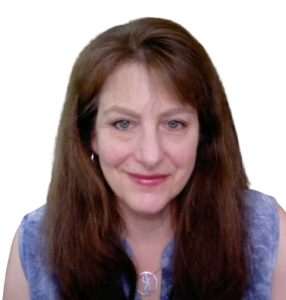
Jeanne Grunert, NAIWE’s Branding & Marketing Expert

October 4, 2024 Post a comment

We wanted to get to know Jeanne Grunert (NAIWE’s Branding & Marketing Expert) better, so last month we sat down with her. Here are some thoughts she shared with us.
How many micro niches should a freelancer serve?

I recommend focusing on no more than three micro niches. This helps you develop a positive reputation in each niche, which naturally leads to recommendations and more work. If you choose to focus on more than one niche, it is helpful if the other niches are related. For example, I focus on two niches: my micro niche is content marketing for SaaS (software as a service) companies, but I added several micro niches around manufacturing software, enterprise integration, and education software (before opening my own company and going independent, I led marketing for large education companies, so it was natural niche extension for me). Spreading yourself beyond 1-3 micro niches dilutes the marketing effect. It is the focus and the area of specialization that helps build recognition quickly among potential customers. Diluting that focus confuses the market, and anytime potential customers are confused, they walk away.

In fiction, it is common for writers to use pen names to more easily develop brand recognition in a micro niche and more easily attract loyal readers eager to read their next work. A good example is Nora Roberts, whose work I enjoy reading. She writes under the name J.D. Robb for her sci-fi murder mystery series “In Death” and under her own name, Nora Roberts, when she writes what I would consider traditional contemporary romance novels. It might confuse loyal  Nora Roberts fans, who expect a small town girl to attract the bad boy newcomer to town (her typical plot) to open a book with the sci fi elements of the “In Death” series.  Instead of risking alienating readers by publishing in a vastly different genre, she developed a second pen name and micro niche, with the result that she has a loyal following in both niches. That’s just one example, but I think you get the idea of why both nonfiction/business writers and fiction writers can benefit from tapping into micro niches.


Do micro niches lend to a regular income stream?

Yes! The best part about finding your micro niche and gaining the first few projects in that niche is that once you develop a reputation within that niche, work comes to you – you don’t have to chase after freelance opportunities. As you develop a positive reputation as the “XYZ Expert” or expert in your micro niche, it becomes easier to attract the right clients to your doorstep.

For me, it was a game changer. I was first introduced to the concept of micro niches around 2020 and decided to take two weeks to reorganize my business at the end of 2020 around my chosen micro niche (I’ll go into details of how to find a potential niche during our webinar). Within four months, I had increased my existing work with clients in the micro niche AND landed two major monthly retainer clients! I no longer had to send out pitches, look for freelance writing work, etc. I now get good leads through my website and referrals. I firmly believe in the power of micro niches and personal branding within a micro niche to build a strong online presence that helps independent writers and editors attract and retain their ideal clients.


Are micro niches new to the publishing industry?

Not really – my Nora Roberts example is a good indicator that they have been around a while. She published the first time under the pen name “J.D. Robb” in 1995.  I think within the publishing industry micro niches have become more prevalent and popular with the rise of e-books because readers who love a specific micro niche can find and purchase them more easily.

For freelance writers who may focus on business writing (articles, blogging, marketing or sales materials, etc.), micro niches aren’t really new, but they can be a challenging area for independent writers/freelancers to understand and undertake with confidence. Many freelance writers get nervous when they hear that they should specialize, or focus on a micro niche. They fear they will lose work if they put their stake in the ground and market themselves exclusively as writers who specialize in SaaS platforms, medical manufacturing, cat dental health, and so on (each of these are examples of micro niches). I’ve found it to be the opposite – by focusing on a specific area within a niche, and developing a solid client list, samples, and highly specialized knowledge, I’ve gotten more business than I did before.

——————

Are you a freelance writer or editor looking to stand out in a crowded market? Join us for an insightful webinar on “Discovering Your Micro Niche” and learn how to carve out a unique space for yourself in the industry.

In this webinar, you’ll gain:

  • Understanding of Micro Niches: Learn what a micro niche is and why it’s crucial for freelancers.
  • Market Research Techniques: Discover effective methods to identify underserved and profitable micro niches.
  • Tailoring Your Services: Find out how to adapt your writing or editing services to meet the specific needs of your chosen niche.
  • Building Authority: Learn strategies to establish yourself as an expert in your micro niche, attracting more clients and higher rates.
  • Case Studies: Explore real-life examples of successful freelance writers and editors who have thrived by focusing on micro niches.

Whether you’re just starting out or looking to refine your current offerings, this webinar will provide you with the tools and insights needed to find and dominate your micro niche. Don’t miss this opportunity to elevate your freelance career!

You can join in this conversation on October 24 and then November 7 at 2:00 pm eastern, when NAIWE will host a discussion on maximizing your marketing efforts. The cost for NAIWE members is only $10! Nonmembers can join for $30. Register today!


Jeanne Grunert is the president and founder of Seven Oaks Consulting, a business-to-business content marketing agency. She is an award-winning writer and direct marketing expert with over 30 years of writing, marketing, and business experience. Prior to founding Seven Oaks Consulting, Jeanne led marketing for divisions of McGraw-Hill Education, Teachers College Columbia University, The College Board, and retail, publishing, and financial service companies in the New York City area. Known worldwide for her exceptional leadership and communication skills, Jeanne works seamlessly across cultural and corporate barriers to achieve outstanding results. She holds an M.A. in writing and an M.S. in direct and digital marketing (awarded with distinction) from New York University, as well as certifications in social media marketing, content marketing, and adult education. Originally from the New York City area, Jeanne currently resides with her husband, John, and many pets on a 17-acre farm in rural Virginia. When not leading marketing teams through her work at Seven Oaks Consulting, she enjoys gardening, reading, cooking, and writing mystery novels.
Categories: Board of Experts, Events

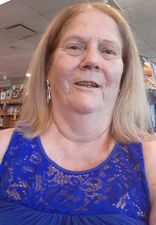
Pamela K. Kinney, NAIWE’s Paranormal Writing Expert

September 6, 2024 Post a comment

We wanted to get to know Pamela K. Kinney (NAIWE’s Paranormal Writing Expert) better, so last month we sat down with her. Here are some thoughts she shared with us.

How did you learn to write a book blurb?

For my first book I went with the publisher Schiffer Publishing, and at that time, they looked to the authors to write their own book blurbs. The publisher edited the authors’ blurbs into the format needed while educating the authors. The next blurb I wrote was for my own self-published novel, How the Vortex Changed My Life.


What is the normal length of a book blurb?

100–200 words. Any more than that, readers will be catching the quickest ride off your page . . . by jumping to another author’s page and buying their book instead. You only have 7 seconds to impress a reader, especially one reading it online.


Are book blurbs written differently for different formats?

When it comes to writing book blurbs, each genre has a different style. I know how to write for nonfiction ghost books and horror, science fiction, and fantasy. In the long run, writing a synopsis/blurb for a book is selling your story/article/nonfiction book to a reader, tempting them to read your book.

——————

I had to learn to write the book blurbs for my nonfiction ghost books. When self-publishing my urban fantasy/horror novel, I wrote the blurb for the back of my book. Since then, I have continued writing blurbs for my books, including for my latest, a YA dark fantasy novel.

Readers check out the cover first, then they read the blurb. It is all about selling your book, capturing readers’ interests with that blurb. In this webinar, writers will learn how they can write effective blurbs.

You can join in this conversation on September 30 at 2:00 pm eastern, when NAIWE will host a discussion on writing marketing material for your books. The cost for NAIWE members is only $10! Nonmembers can join for $30. Register today!


Pamela K. Kinney gave up long ago ignoring the demanding voices in her head and has been writing ever since. Her horror short story, “Bottled Spirits,” was runner-up for the 2013 WSFA Small Press Award and considered one of the seven best genre short fiction for that year. Pamela has various short stories and poems published in fiction and nonfiction anthologies, magazines, and online zines, a science fiction novella, an urban fantasy novel, five nonfiction ghost books, and a nonfiction cryptid book. Her horror poem, “Dementia,” got her mentioned in Best Horror of the Year, Volume Thirteen. Pamela has stories and poems in two horror anthologies to be released in 2024, plus a YA dark fantasy novel, Demon Memories, the first book in the Moon Ridge trilogy.

Categories: Board of Experts, Events

Amy Waters Yarsinske, NAIWE’s Nonfiction Expert

August 2, 2024 Post a comment

We wanted to get to know Amy Waters Yarsinske (NAIWE’s Nonfiction Expert) better, so last month we sat down with her. Here are some thoughts she shared with us.

Is it considered professional for an editor to start a conversation with, “since I have not seen the manuscript, the price I am quoting is based on a manuscript in good condition”?

Absolutely yes. This is the way to professionally preface any conversation with someone who might want an editor’s services.


How often have you had a manuscript portrayed in better condition than it is?

Almost always. Whether I take the project as a professional courtesy or from an unsolicited query normally couched as “could you take a look?” the condition is relatively lower quality or just very bad. The services of a book doctor would be unnecessary if such manuscripts were in fair to good shape. Publishers’ in-house editors can handle those (in most cases, although publishers are increasingly kicking some of those to outside resources such as firms offering ghost/by-line writers to clean up a promising project).


Before accepting a project, do you advise that editors ask if the manuscript has been looked at by anyone else?

Yes, and when one of my publishers asks me to look at another writer’s work, it indicates they have had in-house editorial review at least once and attempted an edit to great frustration. Once such an in-house review rejects that editorial process, and if the publisher still wants the work, they either recommend the submitting author(s) engage a book doctor at their own expense or the publisher engages the same, as was the case more recently with me, to do an overhaul of the work. There are very few publishers who would pay for a book doctor on their own dime.

——————

A funny thing happened on the way to editing a large manuscript . . . A case of first impressions – not good ones – ended the editing effort before the end of the first chapter . . . section . . . it was hard to tell. The submission had come from someone who was not a writer but the publisher was anxious to acquire the subject matter for publication. This meant, for me, a book doctoring job more than an edit but it was proposed as a straight edit, oh, and sight unseen. But the manuscript was in bad shape on arrival and impossible to follow. When it takes months to plow through one “chapter” of a book of undefined scope, it is not an editing gig. This book forced me to wear two hats: developmental and copy editor – in basic terms – a book doctor with a patient on life support. Let’s talk about it.

You can join in this conversation on August 21 at 2:00 pm eastern, when NAIWE will host a discussion on self-editing for your editor. The cost for NAIWE members is only $10! Nonmembers can join for $30. Register today!


Amy Waters Yarsinske is the author of several best-selling, award-winning nonfiction books, published regionally, nationally, and internationally. Amy’s proposal technique was featured in literary agent/author Peter Rubie’s Telling the Story: How to Write and Sell Narrative Nonfiction; she also did a National Press Club panel with Rubie during the No One Left Behind press tour. She has been a regular contributor with international, national, and regional media, to include continued guest spots on national radio. An American in the Basement: The Betrayal of Captain Scott Speicher and the Cover-up of His Death won the Next Generation Indie Book Award for General Non-fiction in 2014, and No One Left Behind: The Lt. Comdr. Michael Scott Speicher Story earned her literary awards, an incredible press tour, and national/international recognition. With over 30 years in the publishing industry, Amy has published over 85 nonfiction books, most of them spotlighting current affairs, the military, history and the environment with a few biographies and corporate histories interspersed. Amy graduated from Randolph-Macon Woman’s College in Lynchburg, Virginia, where she earned her bachelor of arts in English and economics and the University of Virginia School of Architecture, where she earned her Master of Planning and was a DuPont Fellow and Lawn/Range resident.

Categories: Board of Experts, Events

Jake Poinier, NAIWE’s Freelance Expert

July 5, 2024 Post a comment

We wanted to get to know Jake Poinier (NAIWE’s Freelance Expert) better, so last month we sat down with him. Here are some thoughts he shared with us.

What considerations should be factored into every price?

The more detail you can put in your calculation, the better. At a minimum, you want to know the length/format/content you are dealing with, what you’re expected to do to it, communications/meeting time, revisions anticipated, and deadline. A proper estimate also needs to incorporate a ton of gray areas. The more unknowns there are, the more conservative you should be about estimating–which is particularly true with new, unproven clients.


Is it ethical for freelancers to revisit a price in the midst of a project?

Everything about price should be spelled out and agreed upon prior to the start of the project; you can’t just change a price midstream because the project (or client!) turns out to be more challenging than you estimated. One of those elements would include price implications of tasks that are outside of the scope of work. So, if you agree that a project is a 5-page website and the client expands that to 10 pages, you need to have a contract that defines what happens–and you should be very clear with the client when they are making requests outside the scope. In other words, you don’t want to just surprise them with a bigger invoice.


Should freelancers set their prices to be comparable to other freelancers’ offering the same services?

In business, there’s no requirement to be comparable, so I’d say “should” doesn’t really apply. If you personally know freelancers who have similar skills, experience, and client types, however, you’re likely to be in the same range, simply because that’s what the market is willing to bear. This is why I don’t put much faith in industry surveys–you have no idea who is answering them.

——————

Freelance pricing isn’t a one-size-fits-all proposition — and overlooking the nuances can leave you feeling overworked and underpaid. In this webinar, Jake “Dr. Freelance” Poinier discusses the principles of estimating, incorporating a range of diverse practice examples with real-world project descriptions and client scenarios.

You can join in this conversation on July 25 at 2:00 pm eastern, when NAIWE will host a discussion on estimating your projects. The cost for NAIWE members is only $10! Nonmembers can join for $30. Register today!


Jake Poinier made the leap into freelance writing and editing in 1999 after a decade of positions in the publishing industry, giving him key insights from both sides of the desk. As the founder and owner of Boomvang Creative Group, he has worked with a diverse array of Fortune 500 and small businesses, consumer and trade magazines, and independent authors. Jake is committed to helping freelancers improve their businesses and shares his knowledge and experiences frequently as a speaker at industry conferences, through webinars, and on his blog.

Categories: Board of Experts, Events, Professional Development

Ruth Thaler-Carter, NAIWE’s Networking Expert

June 7, 2024 Post a comment

We wanted to get to know Ruth Thaler-Carter (NAIWE’s Networking Expert) better, so last month we sat down with her. Here are some thoughts she shared with us.

How many questions should be asked in an interview?

There’s no standard limit for the number of questions to ask someone in an interview. Sometimes the client will provide the questions they want to answer; sometimes the interviewer handles that aspect. I always prefer to ask more questions than I might need, even if that means having to spend some time on editing responses to fit a word limit. I love it when there’s no word limit! The absolute minimum would be three questions: Please confirm your name, title, and affiliation. What is important about your job or project? What (else) would you like our readers to know about you/your topic?


As the interviewee, how can you get the interviewer to ask the questions you want to answer?

The interviewee can say something ahead of time, by email or phone, about the topics you see as most important to cover. Let the interviewer know something like, “I’m most passionate about …,” “Let’s be sure to include X as my favorite [whatever],” “I think achievement X is my most important contribution,” etc.


What ways can interviewees get selected for an interview?

Being visible in social media and professional association outlets, having a blog with regular posts, speaking at events, presenting webinars, disseminating press releases about achievements, writing letters to the editor with opinions about local or national issues, and similar outreach can get attention that leads to interviews. You can even contact someone with a blog or publication where you’d like to be interviewed and let them know what you would like to talk about and why it might be of interest to their audience. In turn, the interviews can result in more invitations to speak, contribute blog posts, participate in events, and so on. It’s a self-propelling process or cycle. All of these activities feed each other and help establish you as an expert.

——————

Interviews are key to a variety of writing and editing work. Whether you’re doing an interview with a subject for a project or are the subject of one yourself, interviewing is an art and a skill. This webinar will focus on how to craft interviews that make the topic and subject come to life, along with tips on being a better subject oneself.

Ruth E. Thaler-Carter has been interviewing experts and colleagues on a wide range of topics for many years and has been the subject of varied interviews herself.

You can join in this conversation on June 24 at 7:00 pm eastern, when NAIWE will host a discussion on becoming an expert interviewer. The cost for NAIWE members is only $10! Nonmembers can join for $30. Register today!


Ruth Thaler-Carter has been a full-time freelance writer, editor, proofreader, desktop publisher, and speaker for more than 30 years. She has been published locally, regionally, nationally, and internationally in, and does writing, editing, and proofreading for, publications, associations, nonprofits, websites, service firms, independent authors, and businesses. She sold her first freelance articles when she was still in high school. Often called the Queen of Networking, Ruth is active in about a dozen professional associations, serving as a newsletter editor, webmaster, publication author, speaker/presenter, blogger, program host or planner, and chapter leader. In 2006, Ruth launched the Communication Central Be a Better Freelancer annual conference, now cohosted with NAIWE — to help aspiring and established freelancers find greater success. Ruth is also owner and editor-in-chief of the An American Editor blog and owner of the A Flair for Writing publishing business. Her honors include member of her high school alumni hall of fame, in part for her publishing work and networking services; Writers and Books Big Pencil Award for teaching adults and contributions to the literary community; EFfie awards for writing, editing, and newsletters; an APEX award for feature writing; the Philip M. Stern Award of Washington (DC) Independent Writers for service to freelancers; and IABC/DC Communicator of the Year and Silver Quills for magazine writing and newsletters.

Categories: Board of Experts, Events, Professional Development

Karin Beery, NAIWE’s Fiction Expert

May 3, 2024 Post a comment

We wanted to get to know Karin Beery (NAIWE’s Fiction Expert) better, so last month we sat down with her. Here are some thoughts she shared with us.

Do beta readers define themselves by genres?

It can be helpful to find beta readers in your genre, but it’s not necessary. If you know which questions to ask, you can assist anyone to become a useful beta reader.


Do you suggest working with more than one beta reader on the same project?

Absolutely. Even if you’re working with an experienced beta reader, everyone has personal preference. I recommend at least three: if one person doesn’t like something, that could be taste; if two people don’t like it, there might be a problem with the writing.


At what point do you begin to work with beta readers?

After you’ve finished editing and revising your first draft.

——————

Beta readers can help authors clean up and strengthen their manuscripts without hiring an editor, but like editors, not all beta readers are the same. In this webinar, find out what to expect from beta readers, how to find good ones, and how you can help them help you polish your manuscript.

You can join in this conversation on May 20 at 2:00 pm eastern, when NAIWE will host a discussion on turning your friends and family into beta readers. The cost for NAIWE members is only $10! Nonmembers can join for $30. Register today!


Karin Beery is a published author and editor with experience in traditional and self-publishing, freelance editing, and editing for publishers. She is an active member of Advanced Writers and Speakers Association, Christian Authors Network, and the Christian Proofreaders and Editors Network, as well as a PEN Institute instructor. Her specialty is substantive fiction editing with an emphasis in romance and women’s fiction.

Categories: Board of Experts, Events, Professional Development

Marcia Rosen, NAIWE’s Public Relations and Book Marketing Expert

April 5, 2024 Post a comment

We wanted to get to know Marcia Rosen (NAIWE’s Public Relations and Book Marketing Expert) better, so last month we sat down with her. Here are some thoughts she shared with us.
What is a characteristic of a detective that will aid in developing a memoir?

Persistent, determined, willing to ask questions to anyone who might have answers to knowing the truth. A good detective needs to be tenacious, patient, look at the truths of a situation and ask questions that get to the heart of the matter. These qualities are exactly what is needed to write a good memoir. How do you search for clues about your history and their impact on your life?


Are there characteristics or situations for a detective that do not align with developing a memoir?

Of course, being involved in murder cases for example. Putting your life in danger when working on a case.


Is there a particular detective skill that is essential in the prep work for a memoir?

Willingness to spend time searching for answers to your questions about your life and history. Asking serious questions about your life.
n
——————

A good detective needs to be tenacious and patient. A good detective needs to look at the truths of a situation and ask questions that get to the heart of the matter. Those same skills are needed to write a good memoir. How do you search for clues about your history and their impact on your life?

You can join in this conversation on April 30 at 7:00 pm eastern, when NAIWE will host a discussion on becoming the detective for your novel. The cost for NAIWE members is only $10! Nonmembers can join for $30. Register today!


Marcia Rosen (aka M. Glenda Rosen) is an award-winning author of eleven books including her newest one, An Agatha, Raymond, Sherlock and Me Mystery: Murder at the Zoo plus The Senior Sleuths, Dying To Be Beautiful Mystery Series, and The Gourmet Gangster: Mysteries and Menus (menus by her son Jory Rosen). She is also author of The Woman’s Business Therapist and award-winning My Memoir Workbook and has given memoir writing presentations and classes for close to 20 years. She has assisted many authors in developing, writing, publishing, and promoting their books. For 25 years, she was the owner of a successful national marketing and public relations agency. Marcia has frequently been a speaker or program moderator at organization meetings and conferences, bookstores, libraries, and Zoom programs. Topics she has taught and presented over the past 20 years include Encouraging the Writer Within You, Marketing for Authors, Writing Mysteries…Not A Mystery, Writing Your Memoir, and recently Anatomy of Writing a Murder. Many articles on these topics have been published on mystery reader blogs and in newsletters and magazines and her newest articles include Location, Location, Location: Murders Have Their Places; Hearing Voices of Past Famous Detectives: Their Impact and Influences; and Writing Mysteries at a Zoo: With Caution. She is a member of Sisters in Crime National and New Mexico (Croak & Dagger), Southwest Writers, New Mexico Book Association, Women Writing the West, Public Safety Writer’s Association, Women’s National Book Association, and National Association of Independent Writers and Editors.

Categories: Board of Experts, Events, Professional Development

Book Chat: Karin Beery

April 1, 2024 Post a comment

Today’s podcast episode is a Book Chat episode, where we get to know one of the books that has been published by a fellow NAIWE member.

Our guest today is Karin Beery.

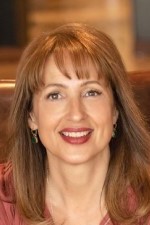
Karin Beery is a published author and editor with experience in traditional and self-publishing, freelance editing, and editing for publishers. She is an active member of Advanced Writers and Speakers Association, Christian Authors Network, and the Christian Proofreaders and Editors Network, as well as a PEN Institute instructor. Her specialty is substantive fiction editing with an emphasis in romance and women’s fiction.


Here is a sneak peak of what we discussed.

Q: When did you first have the idea for this book? And what inspired you to actually write this book?
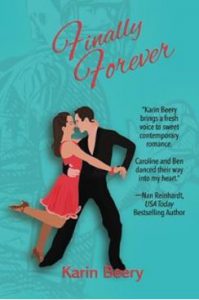
I started this book several years ago after watching many seasons of Dancing with the Stars with my special needs aunt, who lived with us at the time. I’d finished writing a novel and was ready to start a new one. After seeing how much my aunt loved that show and living with her for several years, I wanted to include a dance competition in my book as well as a tribute to my aunt.


Q: Please describe one of your favorite characters from your book.

I love the women of Pathways, a fictional home for special needs women. Many special needs adults (like my aunt) are capable of so much more than people expect. I let my aunt and the women she used to live with inspire the women in this book.


Q: What did you learn while working on this book? And what were some challenges you faced during the writing or publication of this book?

I learned quite a bit about ballroom dancing and football, but many aspects of this book (from working with special needs people to having two sisters) mirror my own life, so I tapped into a lot of personal experiences. My biggest challenge is always me: making time to write (and letting it be a priority).


To learn more about Karin Beery and her new book Finally Forever, listen to the podcast episode.

Categories: Board of Experts, Book Chat, Member Benefits, The Freelance Life Podcast, Writing

Susan Treadgold, NAIWE’s Personal Energy Expert

March 1, 2024 Post a comment

We wanted to get to know Susan Treadgold (NAIWE’s Personal Energy Expert) better, so last month we sat down with her. Here are some thoughts she shared with us.
Are the contents of this webinar just for women?

The content of the webinar is targeted at women, but men are welcome and will also benefit.


When many of us think of energy, we relate it to physical activities. What makes up the energy that you will be talking to us about?

Everything is energy. Anything that we come in contact with — be it food, a thought, or another person — it all either enhances or detracts from our energy.


Is it true that taking small actions are better than taking no actions? How do you recommend starting to build energy in our day?

Taking action and creating small habits that we continue to “stack” is the path to exponential energy. It all starts with a morning routine — to set up your day, week, month, and life — that you don’t need a vacation from!

——————

Join us for a masterclass with best-selling author Susan Treadgold as she unveils the secrets behind the six habits of high-performing women, with a focus on ENERGY. Susan Treadgold, international executive coach and an award-winning speaker, will share her wisdom gleaned from two decades in investment banking and a phenomenal 15-year coaching career.

Are you tired of feeling drained and overwhelmed? Ready to banish burnout once and for all? Drawing on a pool of extensive research driven, science-backed tools and strategies, Susan Treadgold will equip you with the keys to identify, master, and turbocharge your energy levels.

Brace yourself for a live event that will change the game.

You can join in this conversation on March 27 at 2:00 pm eastern, when NAIWE will host a discussion on developing more energy for every day. The cost for NAIWE members is only $10! Nonmembers can join for $30. Register today!


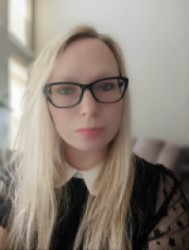
Susan Treadgold is a holistic high-performance coach, speaker, and multiple #1 best-selling author with nearly two decades of investment banking experience at Morgan Stanley, Merrill Lynch, and Citigroup. She empowers women to have more energy and success with the use of science-backed high-performance habits, executive presence, training and a personally curated longevity portfolio of cutting edge biohacking products. She is an award-winning artist, host of The High-Performing Woman talk show, and on the leadership committee of 5050 Women on Boards. She is a proud mother of two teenagers. Family is her love language, and as a board member of Roots of Promise, she is passionate about helping less fortunate kids.

Categories: Board of Experts, Events, Professional Development

Jennia D’Lima, NAIWE’s Creative Nonfiction Expert

February 2, 2024 Post a comment

We wanted to get to know Jennia D’Lima (NAIWE’s Creative Nonfiction Expert) better, so last month we sat down with her. Here are some thoughts she shared with us.

Do all types of life experiences make for good material for a memoir?

They all have the potential to be used to write a riveting memoir. On the other hand, even the most extraordinary life events can fall flat if style falls flat, the voice reads as inauthentic, or the pacing is off. Much like when writing a fictional narrative, these story elements contribute as much to a story’s readability as the plot or events do on their own.


At what point in an individual’s life are they ready to write their memoir?

Readiness is dictated by the intensity of the emotions that still surround the events being written about and has nothing to do with an author’s age or their life circumstances. It’s important to note that an honest emotional assessment needs to come before any outlining or writing. Writing before the emotions have settled and been processed has the potential to harm the author rather than help them find catharsis or share their story in a way that could benefit others.


Are there different types of memoirs?

Yes! There are multiple types or sub-genres when it comes to the memoir category. Summarizing each one would take an entire article, but popular subgenres include the celebrity memoir, the travel memoir (Bill Bryson is one of my favorite travel memoir authors, though he’s written books in other creative nonfiction categories as well), and the transformational memoir (overcoming some type of addiction is a popular theme seen in this subgenre). Many memoirs will fit into multiple subgenres, so I advise authors to not worry about figuring out which one is the best fit for their manuscript.

——————

You’ve lived through some harrowing, unique, life-changing, or otherwise fascinating events. You’re certain that a memoir is the best way to share these experiences and maybe even change someone else’s life or become their source of inspiration. But before you begin, it can be helpful to ask yourself a series of questions to determine whether writing a memoir is right for you. This webinar will use these questions to define what a memoir is and what it isn’t while also addressing an individual’s emotional readiness to share their story.

You can join in this conversation on February 13 at 7:00 pm eastern, when NAIWE will host a discussion on determining if writing a memoir is right for you. The cost for NAIWE members is only $10! Nonmembers can join for $30. Register today!


Jennia Herold D’Lima is a full-blown logophile. She joined her high school’s newspaper in ninth grade, winning statewide awards for her writing, and expanded her journalism skills by continuing to write and edit throughout her high school years and as a college freshman. While earning her BA in psychology (and minoring in cultural anthropology with a focus on precolonial Mesoamerica) and her MA in applied developmental psychology, her writing and editing naturally skewed toward all things academic. Writing for and publishing in peer-reviewed journals, editing papers for classmates, and writing parenting resource guides honed her research skills. Jennia joined multiple professor-led research groups and completed four internships throughout her academic career. After graduating with a master’s, she worked at a national nonprofit in Washington, DC, and as an assistant researcher at the University of Washington in Seattle. Jennia gradually transitioned to full-time editing. She is the host of the Writing & Editing podcast. Jennia enjoys traveling, volunteering, and taking creative photos of books and book-related items in those rare moments when she is not reading or editing.

Categories: Board of Experts, Events, Professional Development

  • « Previous Page
  • 1
  • 2
  • 3
  • 4
  • …
  • 9
  • Next Page »

Recent Posts

  • Words Go a Long Way
  • Member Benefit: Discount on JPASS Annual Membership
  • Book Review: Speak Her Name
  • Jennia D’Lima, NAIWE’s Creative Nonfiction Expert
  • Days to Celebrate in February

Categories

Links

  • Member Area
  • NAIWE Bookstore
  • NAIWE- The Association Site
  • Words Matter Week

Meta

  • Log in
  • Entries feed
  • Comments feed
  • WordPress.org

Latest Posts

Words Go a Long Way

February 20, 2026

Member Benefit: Discount on JPASS Annual Membership

February 13, 2026

Book Review: Speak Her Name

February 9, 2026

Jennia D'Lima, NAIWE's Creative Nonfiction Expert

February 6, 2026

Days to Celebrate in February

January 30, 2026

NAIWE in Public View

January 16, 2026

Contact Us

  • 804-476-4484
  • P.O. Box 412
    Montpelier, VA 23192-0412
Facebook Instagram Linkedin twitter

© NAIWE. All rights reserved. Designed by My House of Design.